
Best Garden Furniture 2026: The Ultimate Guide to Luxury Outdoor Living
Your garden should be a sanctuary that mirrors the elegance of your interior, rather than a space cluttered with furniture that surrenders to the first sign of a British winter. Finding the best garden furniture isn't just about aesthetics; it's about choosing pieces that blend heritage craftsmanship with the resilience needed for our unpredictable climate. We understand the frustration of watching a prized investment rot after one season or feeling confused by the endless debate over wood types and maintenance levels.
You deserve an outdoor room that feels like a natural extension of your home, where luxury doesn't mean constant upkeep. In this guide, we'll help you discover how to select and style the finest pieces that withstand the elements whilst elevating your private retreat. We will explore the latest 2026 safety standards, the enduring appeal of sustainably sourced teak, and the clever design choices that ensure your furniture ages gracefully. From understanding the durability of different hardwoods to mastering the art of low-maintenance luxury, you'll find everything you need to create a timeless outdoor space.
Table of Contents
Choosing the Best Garden Furniture for the British Climate
Your garden is more than just an outdoor space; it's a personal sanctuary where the boundaries between your interior style and the natural world should gracefully blur. Selecting the best garden furniture requires a delicate balance between an aspirational aesthetic and the harsh realities of our British climate. While we often dream of sun-drenched afternoons, the truth is that our furniture must endure everything from biting frosts to the persistent Atlantic drizzle. Choosing pieces that resonate with your home’s identity ensures that your terrace or lawn feels like a true extension of your soul, rather than an afterthought.
It's tempting to opt for budget-friendly alternatives found in high-street catalogues, but these choices often lead to a frustrating cycle of replacement. Cheap plastics and low-grade softwoods frequently fail after a single harsh winter, ultimately costing you more in both money and effort over time. Investing in quality means choosing pieces that age with character and heritage. By setting a thoughtful budget for primary investment pieces, you can focus on materials that offer longevity, leaving seasonal accessories like cushions and throws to provide the shifting pops of colour and texture.
The Reality of Outdoor Durability
British weather is a master of destruction when it comes to inferior materials. Whilst you sleep, winter frost expands in the pores of cheap timber, and summer UV rays brittle the structure of standard plastics. There's a vital distinction between 'water-resistant'-which merely beads light rain-and truly 'waterproof' materials that survive a February downpour. For those living in the windswept British countryside, structural weight is equally crucial; lightweight sets can easily become hazardous in a gale. Understanding the unique properties of teak wood is a helpful starting point, as its natural density and high oil content provide the stability and resilience that lighter, mass-produced alternatives simply lack.
Defining Your Garden's Purpose
As we look toward the design trends of 2026, the 'outdoor room' has evolved from a mere concept into a lifestyle necessity. Before choosing your set, consider how you truly live within your space. Do you envision intimate family breakfasts or grand summer soirées? A dining-focused area requires different ergonomics than a dedicated 'lounging' zone designed for slow, contemplative afternoons. We recommend choosing furniture that scales with your lifestyle, such as versatile teak tables that accommodate extra guests without overcrowding your patio. This intentional approach ensures your garden remains a functional, beautiful haven throughout the seasons.
Why Teak Remains the Gold Standard for Outdoor Seating
Teak, known botanically as Tectona grandis, is far more than just a durable timber; it's a botanical marvel that has earned its place as the premier choice for the best garden furniture. Unlike many other hardwoods that require frequent applications of wood preservative chemicals to survive the UK's relentless damp, teak possesses a high natural oil and silica content. This unique composition acts as a built-in shield, naturally repelling water and resisting the woodworm and rot that often claim lesser materials. Whilst alternatives like Acacia may mimic the appearance of teak, they lack this internal resilience, often succumbing to the elements within a few short seasons.
For the true furniture connoisseur, the appeal of teak lies in its sophisticated aesthetic journey. When new, it glows with warm, golden honey tones that radiate a sense of luxury. Over time, as it interacts with the British air, it undergoes a graceful transformation into a distinguished, silvery-grey patina. This change doesn't signal decay; rather, it's a badge of honour that highlights the wood's maturity and heritage. It's this ability to age with such poise that makes teak a legacy material, cherished by families who view their garden as a permanent gallery of fine craftsmanship.
Understanding Teak Grades (A, B, and C)
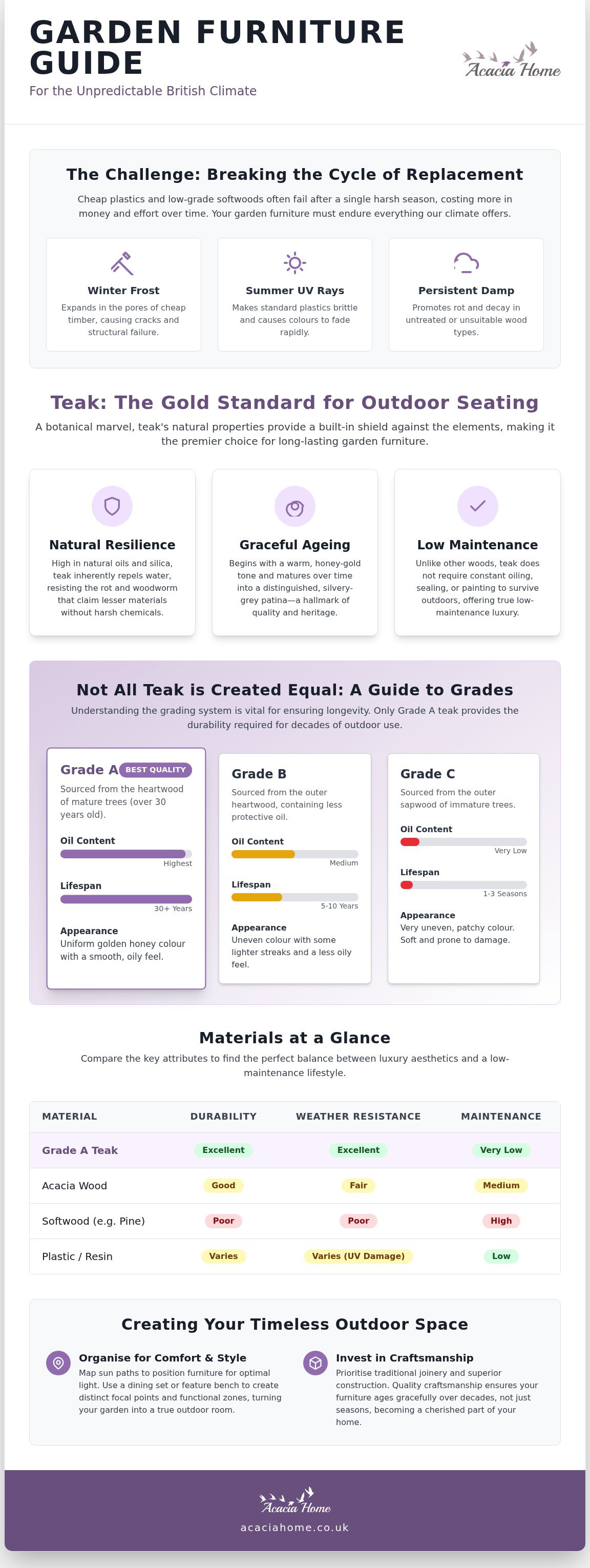
Not all teak is created equal, and understanding the grading system is vital for ensuring longevity. Grade A teak is the gold standard, harvested exclusively from the heartwood of mature trees. This dense, oil-rich centre is the only part of the tree capable of withstanding decades of British frost. In contrast, Grade C teak is often 'sapwood'-the softer, younger outer layer of the tree. Sapwood lacks the protective oils of the heartwood, leading to premature failure and warping. We ensure our timber is properly kiln-dried, a meticulous process that stabilises the wood to prevent splitting as UK temperatures fluctuate between humid summers and freezing winters.
The Craftsmanship of Quality Teak Furniture
The structural integrity of your seating depends entirely on how it's put together. High-quality teak pieces utilise traditional mortise and tenon joinery, where the wood is interlocking and secured with dowels, rather than relying on simple screws or glue that can rust and fail. This method ensures that heavy-set teak chairs remain stable and secure even on uneven patio surfaces. The tactile experience is just as important; a finely sanded surface should feel smooth and buttery to the touch, reflecting the expert eye of the artisan. If you're ready to bring this level of heritage into your own sanctuary, you might enjoy exploring our curated collection of teak garden furniture designed for a lifetime of outdoor living.
Comparing Materials: Which Garden Furniture Lasts the Longest?
Selecting the best garden furniture often feels like a journey through a landscape of conflicting promises. Whilst many materials claim to be 'all-weather', the true test of longevity is how a piece looks and feels after a decade on a British patio. When we compare the primary contenders-teak, aluminium, synthetic rattan, and softwoods-the differences in maintenance and durability become stark. Softwoods like pine or spruce often require annual chemical treatments just to survive, yet they still remain prone to warping. In contrast, high-quality timber and metal options offer a more permanent solution for those who view their garden as a long-term investment.
Maintenance levels vary significantly across these categories. Aluminium and synthetic rattan are often praised for their 'wipe-clean' nature, requiring little more than a soapy sponge. However, natural wood offers a tactile warmth that metal simply cannot replicate. There is also the crucial factor of stability. In the face of a sudden British gale, lightweight aluminium or plastic-weave sets can easily be tossed across a lawn. The natural density of teak provides a reassuring weight, ensuring your sanctuary remains exactly where you intended it to be, regardless of the forecast.
Teak vs. Synthetic Rattan
Synthetic rattan has become a staple of many UK gardens, offering a contemporary woven look. It's important to recognise that most rattan is a petroleum-based plastic weave. Over time, exposure to intense UV light can cause these strands to become brittle and snap. Unlike natural timber, a broken rattan strand is nearly impossible to repair invisibly. Teak, however, remains structurally sound for decades. If the surface becomes marked or you simply wish to restore its original honey glow, a light sanding is all it takes to reveal a fresh layer of wood. It is this inherent repairability that makes natural timber the more sustainable, eco-friendly choice for the conscious homeowner.
Metal and Aluminium Options
Aluminium is a popular choice for modern, minimalist garden designs due to its rust-proof nature and lightweight frame. While it's easy to move around, it lacks the thermal comfort of wood. On a rare scorching July afternoon, metal chairs can become uncomfortably hot, just as they feel icy to the touch during a crisp autumn morning. Cast iron, whilst traditional and heavy, is notoriously prone to rust in our damp climate, demanding constant repainting to prevent decay. Wood acts as a natural insulator, staying pleasantly cool in the sun and holding a gentle warmth in the shade. For a space that feels inviting throughout the year, the organic temperature regulation of timber remains unsurpassed.
How to Organise Your Garden for Maximum Comfort and Style
Creating a garden that feels like a natural extension of your home requires a thoughtful approach to layout. It's not just about finding the best garden furniture; it's about where that furniture lives and how it invites you to linger. To begin, map your garden's sun path throughout the day. A morning coffee nook should catch the early light, whilst a dining area is often best placed where the evening sun remains warm. Once you've identified these pockets of light, create a focal point. A central teak table or a beautifully crafted statement bench provides an anchor, drawing the eye and giving the space a sense of purpose.
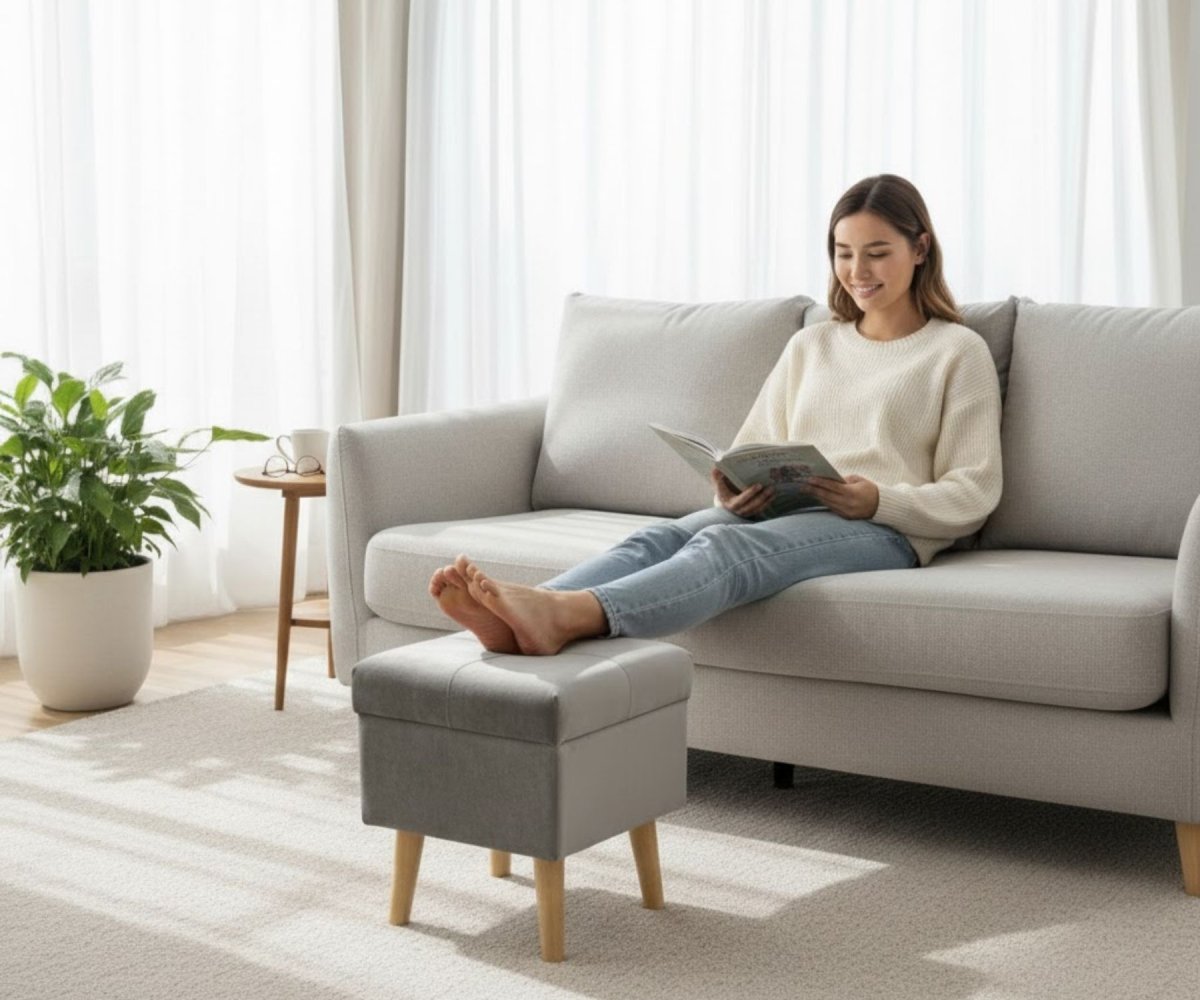
To achieve a lived-in, sophisticated feel, mix your textures. Pairing the organic strength of teak sets with soft, weather-resistant ottomans adds a layer of comfort that encourages relaxation. Use 'zoning' to separate your dining areas from quiet reading nooks; this can be done subtly with planters or by grouping furniture to create distinct 'rooms' without the need for walls. Finally, don't shy away from indoor-style comforts. High-quality, weather-resistant cushions and throws bring a sense of luxury that makes the transition from the lounge to the lawn feel effortless.
The Seamless Transition: Indoor to Outdoor Style
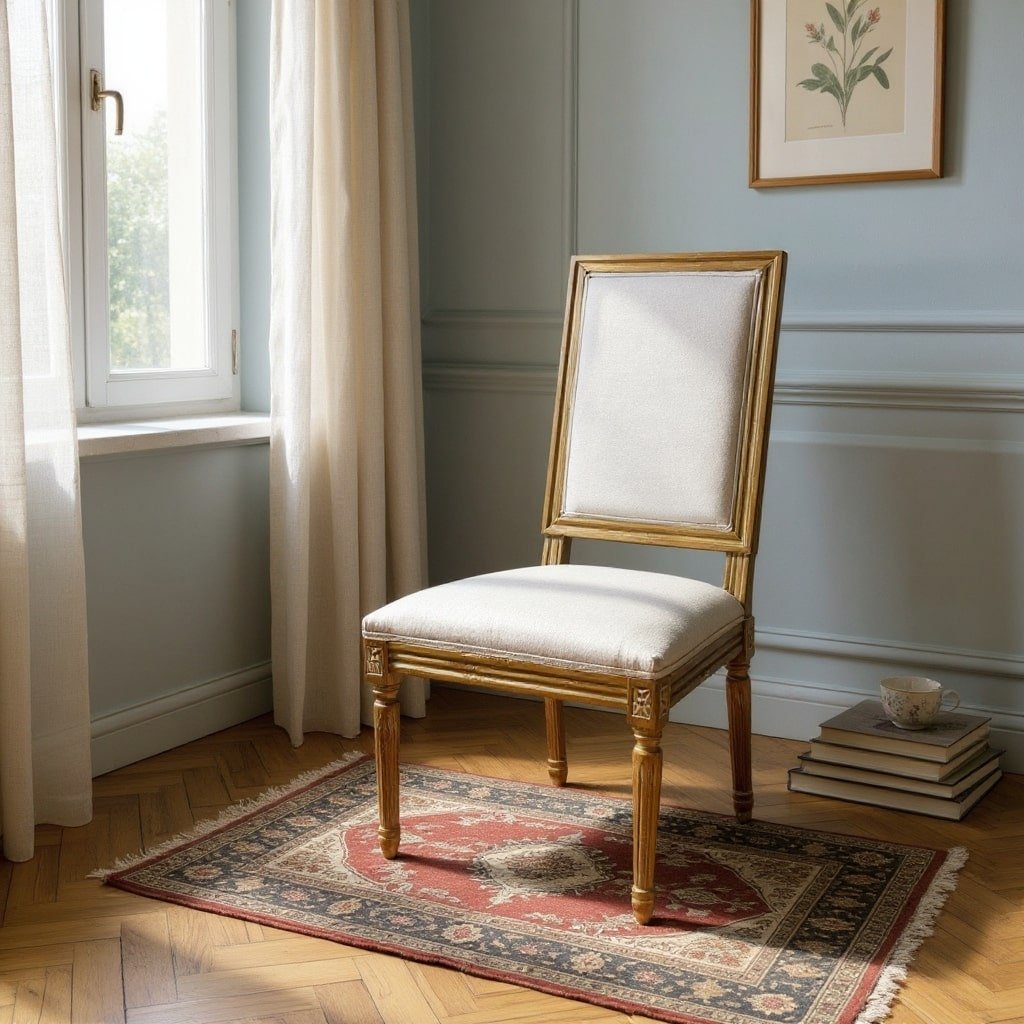
A truly curated home maintains a consistent narrative between the interior and the garden. When choosing outdoor pieces, look for silhouettes that complement your indoor occasional chairs. Maintaining a shared colour palette between your conservatory and patio helps bridge the gap, making the entire property feel more expansive. You can enhance this 'room' feel amongst the greenery by using outdoor rugs and strategic lighting to frame your seating area. This approach ensures your garden doesn't feel like a separate entity but a cherished part of your living space.
Small Space Solutions for Patios and Balconies
For those with compact UK gardens or balconies, the best garden furniture often comes in the form of elegant bistro sets or folding teak chairs. These pieces offer the same heritage quality as larger sets but can be easily tucked away or rearranged. Use vertical space with wall-mounted planters to frame your seating without sacrificing floor area. Multi-functional pieces, such as benches that offer hidden storage, are invaluable in smaller settings. If you're looking to start your garden transformation, our teak garden furniture collection offers timeless designs that fit beautifully into any space, large or small.
Investing in Longevity: The Acacia Home Approach
At Acacia Home, we believe the best garden furniture should be a considered investment that brings joy to your family for decades. Our curated collection avoids the fleeting whims of seasonal fads, focusing instead on timeless silhouettes that look as sophisticated today as they will in twenty years. As a family-owned business, we take immense pride in our global manufacturing links, ensuring every piece of teak we bring to the UK market meets our exacting standards for craftsmanship. We treat every customer as a partner in the creative process, offering the kind of personalised service that only a dedicated specialist can provide.
Finding the best garden furniture for your home is about more than a single season; it's about a lifetime of memories. We curate each piece with a visionary eye, bridging the gap between traditional values like quality and the contemporary need for a personal sanctuary. By choosing materials that age with grace, you're not just buying a table or a chair; you're securing a legacy piece that will anchor your garden for generations to come.
Simple Maintenance for Teak Furniture
Caring for your teak furniture is remarkably straightforward, thanks to the wood's inherent resilience. A simple annual clean with mild soapy water and a soft brush is usually enough to remove any lichen or moss that has settled during the damp months. When it comes to the finish, you face a delightful choice. If you prefer the original honey glow, a high-quality teak oil can be applied occasionally. However, many of our clients prefer to let the wood age naturally into its iconic silvery-grey patina. Unlike softwoods or cheaper hardwoods that require indoor storage, your teak pieces can remain outdoors all year round, standing firm against the frost whilst you wait for the first signs of spring.
The Acacia Home Guarantee
Our commitment to quality starts with the raw material. We source only the finest Grade A teak, harvested from the mature heartwood where the protective oils are most concentrated. This dedication ensures the furniture we provide isn't just beautiful; it's structurally superior. We act as a bridge between skilled global manufacturers and your British garden, curating a range that reflects both international excellence and local taste. We invite you to explore our full range of teak dining and lounging sets to find the perfect anchor for your outdoor sanctuary.
Before you finalise your 2026 purchase, use this checklist to ensure you're making a choice that lasts:
Measure your space: Ensure you have at least 90cm of 'walk-around' room around dining sets to maintain a sense of flow.
Check the joinery: Look for traditional mortise and tenon joints, which provide far more stability than simple screws.
Verify safety standards: Ensure your seating meets the BS EN 581-2:2026 standard for strength and durability.
Consider the material: Ask if the wood is Grade A heartwood to guarantee it can survive the UK climate without rotting.
Elevate Your Outdoor Living Experience
Your garden is a canvas for personal expression; choosing the right pieces is the first step in creating a space that ages with grace. By prioritising materials like heartwood teak and focusing on traditional joinery, you ensure your sanctuary remains resilient against the unpredictable British elements. We've explored how thoughtful organisation and a consistent design language can turn a simple patio into a luxurious outdoor room that feels like a natural extension of your interior.
As a family-owned UK business and specialists in expertly curated timber, we're dedicated to helping you find the best garden furniture that balances high-quality craftsmanship with refined aesthetics. Our collections are specifically designed to withstand the unique demands of our climate whilst providing a sophisticated backdrop for your most cherished moments. This commitment to quality ensures that your investment provides comfort and beauty for many years to come.
Explore our curated collection of premium Teak Garden Furniture and begin the journey of transforming your garden into a timeless retreat. We look forward to helping you shape an outdoor space that truly feels like home.
Frequently Asked Questions
What is the best material for garden furniture to leave outside all year round in the UK?
Grade A teak is widely considered the premier material for year-round outdoor use in the United Kingdom. Its exceptionally high natural oil and silica content provides a built-in resistance to moisture, rot, and woodworm. Whilst other materials may crack under frost or rust in the rain, high-quality teak remains structurally sound. This resilience makes it a favourite for those seeking the best garden furniture that requires minimal protection during our unpredictable British winters.
Is teak garden furniture worth the higher price compared to acacia wood?
Investing in teak is often more cost-effective over a decade than choosing acacia wood. Acacia is a lovely hardwood, but it lacks the self-protecting oils found in teak, meaning it requires frequent chemical treatments to prevent decay. Without this maintenance, acacia can warp or rot within just a few years. Teak’s longevity ensures you won't need to replace your set frequently, making it a superior long-term investment for your outdoor sanctuary.
How do I stop my wooden garden furniture from turning grey?
To maintain the warm honey tones of your furniture, you should apply a specialised teak protector or sealer once a year. This process creates a barrier against UV rays, which are responsible for the natural oxidation that turns timber into a silvery-grey patina. Always ensure the wood is completely dry and clean before application. If you prefer the aged look, simply leave the wood untreated and let nature take its course.
Can I use indoor occasional chairs in my garden or conservatory?
You can beautifully style indoor occasional chairs within a conservatory or sunroom where they are protected from direct rain and ground moisture. However, standard indoor furniture isn't designed to withstand the UV exposure and humidity found in a garden. To create a cohesive look, we recommend choosing outdoor-specific pieces that mirror the elegant silhouettes of your interior seating. This ensures your aesthetic remains consistent whilst your furniture stays protected from the elements.
What is the difference between Grade A and Grade C teak?
Grade A teak is harvested from the centre of a mature tree, known as the heartwood, where the protective oils are most concentrated. It's dense, uniform in colour, and incredibly durable. Grade C is taken from the outer sapwood layers. This wood is softer, lighter in colour, and lacks the natural resistance needed for outdoor survival. Choosing Grade A is essential if you want your furniture to last for generations.
How do I protect my garden furniture from strong winds?
The natural density of teak makes it much heavier than aluminium or plastic alternatives, providing a sturdy foundation during the British gale season. If your garden is particularly exposed, you can further secure your pieces by placing them against a wall or using discreet ground anchors. We also recommend removing any loose cushions or lightweight accessories during storm warnings to prevent them from being carried away by high winds.
Do I need to cover my teak garden furniture during the winter?
You don't strictly need to cover Grade A teak during the winter, as the wood's natural oils protect it from rot and frost. However, using a breathable cover can be a practical choice to keep your furniture clean from bird droppings and fallen leaves. If you do choose to use a cover, ensure it allows for air circulation to prevent the build-up of mould on the surface of the timber.
What is the most comfortable type of garden seating for long periods?
For long afternoons of relaxation, ergonomic teak chairs paired with high-quality, weather-resistant cushions offer the ultimate comfort. Look for designs that feature curved backrests and wide armrests to support your posture. Incorporating footstools or ottomans can also transform a standard chair into a lounge-like experience. This combination allows you to enjoy your garden for hours, making it the best garden furniture for those who value both style and wellbeing.
Comments