
The Bergère Chair: A Guide to Timeless French Elegance and Comfort
- info642352
- Aug 10
- 12 min read
What if the most formal-looking antique in your room was actually the most comfortable seat you've ever owned? Many homeowners feel a slight hesitation when it comes to French furniture, worrying that a classic bergère chair might feel a bit too museum-like for a busy British lounge. It's a common concern, especially when you're faced with confusing terminology or the fear that an ornate wooden frame will feel stiff and uninviting amongst your modern pieces. You've likely wondered if these elegant designs can truly handle the demands of a contemporary home without looking out of place.
We're here to show you that the bergère is far from a rigid relic; it's a deep-seated sanctuary originally designed for the ultimate relaxation. You'll soon discover the unique features that set this piece apart and gain the confidence to distinguish it from other French styles with ease. We'll explore the rich history, distinctive characteristics, and styling secrets of this beloved classic, ensuring you can blend timeless French elegance with the warmth and comfort your home deserves.
Table of Contents
What is a Bergère Chair? Defining the Quintessential French Armchair
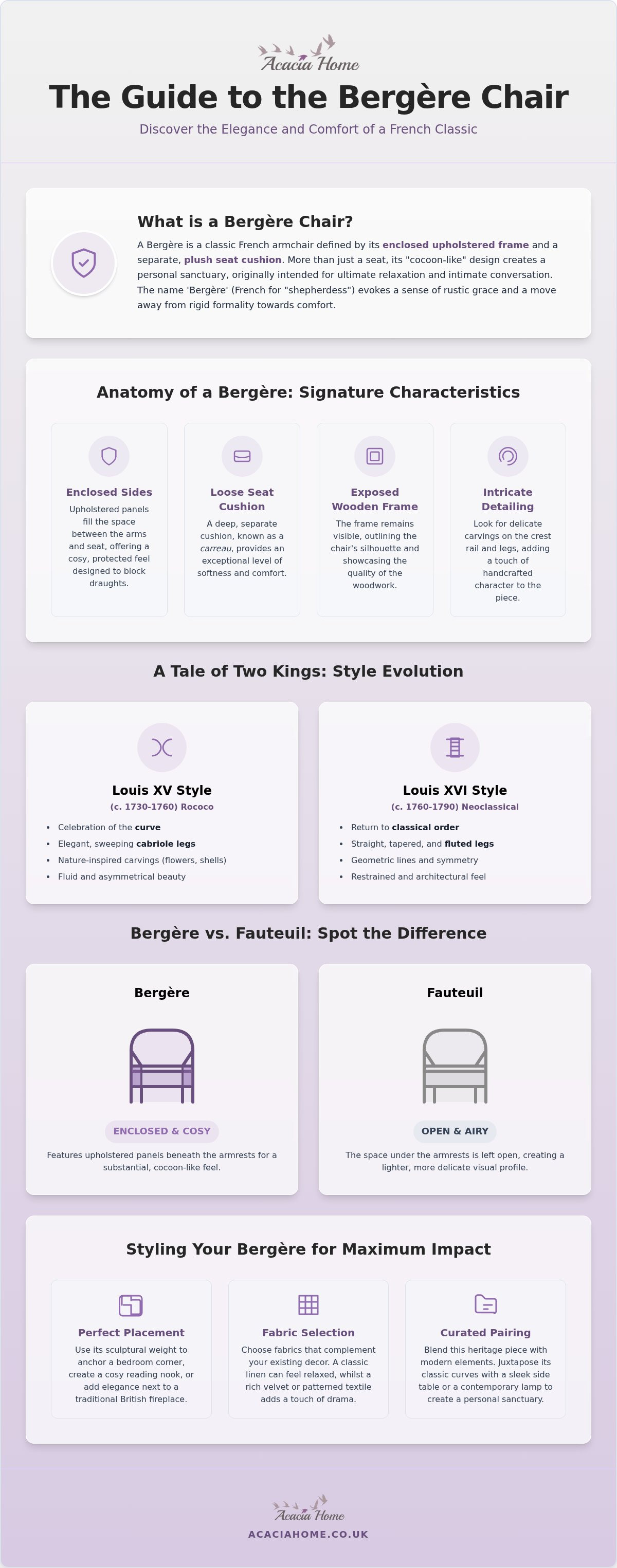
A bergère chair is a masterclass in the marriage of structural beauty and indulgent relaxation. At its heart, this classic piece is an upholstered armchair featuring an enclosed wooden frame and a plush, separate seat cushion. If you've ever found yourself wondering, What is a Bergère Chair?, the answer lies in its distinctively "enclosed" silhouette. Whilst other French seating styles might leave the space beneath the armrests open, the bergère fills these gaps with fabric, creating a cosy, cocoon-like environment for the person seated.
This design choice isn't just about aesthetics; it transforms the chair into a personal sanctuary. The generous cushioning and deep seat invite you to sink in, making it a favourite for quiet afternoons with a book. The frame itself is usually crafted from solid wood, such as beech or oak, often finished with delicate hand-carved motifs or a soft, painted patina that highlights its elegant curves and artisanal heritage.
The Meaning Behind the Name
The term "bergère" translates from French to mean "shepherdess," a name that carries a charmingly rustic weight. During the mid-18th century, French society became enamoured with pastoral themes and a more relaxed way of living. This chair was the furniture equivalent of that movement. It represented a bold departure from the rigid, upright chairs of earlier eras, moving instead toward a culture where conversation and lounging were celebrated. The name evokes a sense of simple, countryside grace, even when the chair is placed in the most sophisticated of city drawing rooms.
Signature Characteristics to Look For
When you're searching for an authentic bergère chair, the most prominent feature to identify is the separate seat cushion, known in French as the carreau. This isn't just a pad; it's a deep, loose cushion that provides a level of softness you won't find in more formal chairs with fixed upholstery. Other hallmarks include:
Exposed Wooden Frame: The frame remains visible, outlining the upholstery like a beautiful picture frame and showcasing the skill of the woodworker.
Enclosed Armrests: The upholstered panels between the arms and the seat were originally designed to protect the sitter from draughts in large, stone-floored French châteaux.
Intricate Detailing: Look for subtle carvings on the crest rail or the cabriole legs, which add a touch of handcrafted character to the piece.
These features combine to create a seat that feels substantial and protective. It's an ideal choice for anyone looking to add a sense of history and "sculptural weight" to their home whilst ensuring they have a truly comfortable place to rest.
The Evolution of Elegance: From 18th-Century France to Modern British Homes
The story of the bergère chair begins in the mid-1700s, a period when French society was shedding the stiff, formal constraints of the Baroque era. Under the reign of Louis XV, the Rococo style flourished, bringing with it a newfound desire for intimacy, comfort, and ease. Furniture was no longer just a symbol of status to be sat upon rigidly; it became a tool for the burgeoning "salon" culture, where spirited conversation and lounging were the order of the day. This shift marked the birth of a seat that prioritised the human form, offering a level of physical support that had previously been reserved for the private chambers of royalty.
Louis XV vs Louis XVI Bergères
While both styles share the core DNA of the bergère, their silhouettes tell very different stories of French history. The Louis XV style is a celebration of the curve. You'll recognise it by the elegant cabriole legs that sweep outward, often ending in a delicate scroll or "deer's foot" detail. The frames are frequently adorned with nature-inspired carvings of flowers and shells, reflecting the era's obsession with fluid, asymmetrical beauty.
In contrast, the Louis XVI period brought a return to classical order. Inspired by the rediscovery of Pompeii, designers moved toward Neoclassicism, replacing fluid curves with straight, geometric lines. These chairs feature fluted legs that resemble ancient Greek columns and symmetrical frames that feel more restrained and architectural. Today, both of these historical influences are beautifully preserved in the modern louis accent chair, allowing you to choose a silhouette that either softens a room with curves or grounds it with structured poise.
Adapting the Bergère for Contemporary Living
Interior designers across the UK continue to champion this style because it possesses a rare, "timeless" quality that transcends fleeting trends. By updating the upholstery, you can completely redefine its personality. A weathered oak frame paired with a neutral linen fabric creates a relaxed, "French farmhouse" aesthetic that feels right at home in a charming country residence. Conversely, a dark-stained frame with a rich, jewel-toned velvet can turn the chair into a bold statement piece for a sophisticated urban dwelling.
This versatility allows the chair to act as a sophisticated bridge between antique heritage and modern minimalism. What began as a revolutionary seat for the royal courts of Versailles has gracefully transitioned into a beloved staple of the modern British lounge. If you're looking to introduce this sense of history into your own space, you'll find plenty of inspiration amongst our hand-picked Louis style chairs.
Bergère vs Fauteuil: Identifying the Key Differences in French Seating
If you've spent any time exploring the world of French furniture, you've likely come across the term "fauteuil" alongside the bergère. Whilst they share a similar aristocratic heritage, they play very different roles in a room's design and daily life. Think of the fauteuil as the "open" cousin of the bergère chair. It's lighter, more agile, and designed for a slightly more formal posture. The bergère, by contrast, is your deep-seated companion for a long evening, offering a level of physical and visual weight that grounds a room's aesthetic.
Structural Differences at a Glance
The most immediate difference lies in the arms. A fauteuil features open sides where you can see straight through the space between the armrest and the seat. This gives it a graceful, airy quality that works beautifully in smaller rooms. The bergère chair is "enclosed," with upholstered panels that wrap around the sitter. This structural choice also affects the seat; while a fauteuil often has a fixed, thinner seat pad, the bergère relies on that plush, loose cushion that defines its comfort.
This "closed" design offers a more private and cosy seating experience because the upholstered sides act as a gentle barrier to the rest of the room. It creates a small, quiet world just for you. For those who love a modern twist on these classical silhouettes, the ghost chair offers a transparent evolution of these forms, stripping away the traditional upholstery whilst keeping the iconic Louis shape.
Which Style Should You Choose?
Deciding between the two styles depends on the atmosphere you want to create and the space you have available. Because the fauteuil is visually lighter, it's perfect for formal dining or as a desk chair in a study where you want light to pass through the furniture. It doesn't clutter the eye, making it a favourite for hallways or narrow landings. However, when you're looking for a primary occasional chair for a lounge or master suite, the bergère is the superior choice. Its deep proportions and protective sides make it the natural resident of a reading nook or a quiet corner beside a fireplace.
We often suggest mixing the two styles to create a space that feels curated rather than "matched." Pairing a substantial bergère with a couple of delicate fauteuils creates a wonderful balance of textures and heights. It suggests a home that has been lovingly collected over time, blending the airy elegance of the fauteuil with the indulgent, sanctuary-like feel of the bergère. This combination ensures your home remains functional for guests whilst providing you with a dedicated spot for total relaxation.
Choosing and Styling Your Bergère Chair for Maximum Impact
The placement of a bergère chair can define the entire mood of a room. Unlike smaller occasional chairs that can feel lost in a large room, the bergère has enough visual presence to anchor a space. Its natural home is often found tucked into a quiet bedroom corner or positioned proudly beside a fireplace. In these spots, the chair’s enclosed design creates a sense of privacy, offering a dedicated retreat for morning coffee or evening reading. It’s a piece that invites you to slow down and stay a while.
To truly make the chair a statement piece, consider the interplay between the frame and your walls. A dark-stained or painted frame set against a pale, neutral wall creates a striking silhouette that highlights the chair’s architectural curves. If you're aiming for a more cohesive, serene environment, matching a weathered oak frame with soft, tonal wallpaper allows the texture of the wood to shine without overwhelming the senses. For the ultimate lounging experience, we highly recommend pairing the chair with an ottoman, which extends the comfort and invites you to put your feet up for hours.
Selecting the Right Wood Finish and Fabric
The choice of materials will dictate whether your chair feels like a rustic heirloom or a piece of royal history. Natural oak or weathered wood finishes are the foundation of the "French farmhouse" look. These pair beautifully with heavy linens in oatmeal or soft grey, creating a tactile, lived-in feel. If your goal is formal grandeur, look for gilt finishes or deep mahogany woods. These richer frames demand luxurious fabrics like velvet, which catches the light and adds a layer of sophisticated depth to the room. When choosing your fabric, opt for high-quality weaves that will hold their shape against the chair's generous padding over the years.
Accessorising Your French Style Chair
Whilst the chair is a beauty on its own, a few thoughtful touches can soften the wooden elements and make it feel more integrated. A single, well-chosen scatter cushion can bridge the gap between the chair’s upholstery and the rest of your room’s colour palette. Choose a cushion that is slightly smaller than the back panel so you don't hide the beautiful wooden crest rail. Draping a soft wool or cashmere throw over one arm adds a layer of inviting texture and is perfect for those chilly British evenings. You can find more inspiration on how to choose and style French style chairs uk to help you perfect the look. If you're ready to start your journey, why not explore our latest collection of Louis style chairs to find your new favourite seat?
Why a Bergère Chair is the Perfect Addition to Your Acacia Home Collection
At Acacia Home, we believe your living space should be a true extension of your identity, a place where every piece tells a story of personal taste and curated beauty. Choosing a bergère chair is about more than just filling a corner; it's about selecting a piece that brings a sense of global heritage into the heart of your home. These chairs offer a rare versatility, serving as a functional, deep-seated retreat for your quietest moments whilst acting as a decorative masterpiece that elevates your entire interior. Whether it’s grounding a large lounge or adding a touch of soul to a modern bedroom, this French classic remains one of the most impactful choices you can make for your space.
We invite you to view your home as a sanctuary, with the bergère acting as its comforting centrepiece. By investing in a design that has already endured for centuries, you're stepping away from the cycle of passing trends and choosing something with permanent soul. It’s a chair that doesn't just sit in a room; it presides over it, offering a level of sophisticated comfort that few other styles can match. When you sink into those enclosed arms, you aren't just sitting down; you're taking a moment for yourself in a seat designed specifically for that purpose.
Quality Craftsmanship You Can Trust
Our commitment to excellence begins with the materials. Every bergère chair in our selection is chosen with an expert eye for detail, ensuring that the solid wood frames and high-quality upholstery meet the demands of a busy British household. We understand that furniture needs to be as durable as it is beautiful, which is why we prioritise traditional construction methods that stand the test of time. A truly exceptional chair is more than a seat; it's a silent witness to a family’s history, growing more beautiful with every passing year. This dedication to quality ensures that your investment remains a beloved part of your home for decades to come.
Start Your Interior Transformation
Starting your journey toward a more elegant, comfortable home is a simple and rewarding process. We take great pride in acting as a bridge between world-class craftsmanship and your front door, offering national UK delivery that brings our curated collection directly to you. As a family-owned business, we value the relationships we build with our customers, providing a level of personal service and styling advice that you won't find in larger, impersonal showrooms. We’re here to help you find the perfect piece that resonates with your personal aesthetic and fits seamlessly into your lifestyle. If you're ready to bring a touch of French elegance into your lounge or bedroom, we invite you to Explore our collection of Louis style chairs and discover the difference that expert curation makes.
Bringing French Heritage into Your Modern Sanctuary
Embracing the elegance of a bergère chair is about much more than just adding a seat to a room; it's an invitation to slow down and enjoy a moment of true, enclosed comfort. We've explored how this iconic design moved from the royal courts of France to become a versatile staple in modern British homes, offering a unique blend of privacy and plush relaxation. Whether you choose the fluid curves of Louis XV or the architectural poise of Louis XVI, you're investing in a piece of history that transcends fleeting trends and brings a sense of soul to your living space.
As a UK-based family business, we take immense pride in our role as a bridge between global craftsmanship and your interior. Every piece in our collection is expertly curated to ensure it meets our high standards for quality, comfort, and character. With national delivery across the United Kingdom, bringing this sophisticated French charm into your own lounge or bedroom is effortless. We invite you to discover our curated range of elegant Louis style chairs and find the perfect companion for your home. Your journey toward a more beautiful, restful space begins with a single, well-chosen classic.
Frequently Asked Questions
What is the difference between a bergère and a fauteuil?
A bergère features enclosed, upholstered sides, whereas a fauteuil has open arms. This structural difference makes the bergère visually heavier and more protective. While both share the iconic Louis silhouette, the bergère is designed for deep relaxation and lingering, whereas the fauteuil is often lighter and better suited for formal dining or desk work where a more upright posture is required.
Is a bergère chair comfortable for daily use?
Yes, the bergère chair was specifically designed for comfort and informal lounging. Unlike many antique-style chairs that prioritise an upright, rigid posture, this design features a deep seat and a plush, loose cushion. It is an ideal choice for a primary reading nook or a fireside seat in a British home where you intend to spend long, relaxing afternoons in total comfort.
What kind of fabric is best for a French style chair?
Linen is the perfect choice for a relaxed, "French farmhouse" aesthetic, offering a breathable and tactile finish that feels lived-in. For a touch of luxury, velvet is highly recommended as it catches the light beautifully on the chair's hand-carved curves. Both fabrics are durable enough for daily life whilst maintaining the sophisticated, heritage look that these timeless pieces demand for a curated interior.
Can I use a bergère chair in a modern living room?
Absolutely, these chairs act as a sophisticated bridge between traditional heritage and contemporary minimalism. By choosing a neutral fabric or a bold, contrasting frame colour, you can make the chair feel entirely current. It adds "sculptural weight" and a sense of history to a modern space, preventing a room from feeling too clinical or one-dimensional by introducing soft, organic curves.
What does "bergère" mean in furniture design?
The word "bergère" translates to "shepherdess" in French. In the context of furniture, it refers to an upholstered armchair with enclosed sides and a separate seat cushion. The name reflects an 18th-century shift toward pastoral themes and a more informal, comfortable way of living, moving away from the rigid, formal seating of the Baroque era to something more intimate and inviting.
How do I identify a genuine Louis XV style bergère?
Look for fluid, asymmetrical curves and elegant cabriole legs that sweep outward. A Louis XV style bergère chair will often feature nature-inspired carvings, such as shells or flowers, on the crest rail and legs. The overall silhouette is softer and more organic compared to the straight, geometric lines and fluted legs found in the later, more architectural Louis XVI Neoclassical designs.
Are bergère chairs suitable for small bedrooms?
They are excellent for creating a cosy "room within a room" in a smaller bedroom. Whilst they have a substantial presence, placing one in a corner provides a dedicated sanctuary for dressing or reading without cluttering the floor space. Choosing a lighter wood finish or a pale, neutral fabric can help the chair feel integrated and airy rather than overwhelming the room's proportions.
Do bergère chairs always have separate cushions?
A separate, loose seat cushion is a hallmark of the traditional bergère design. This feature is what provides the signature deep-seated comfort that sets it apart from other French armchairs with fixed upholstery. Whilst modern interpretations may occasionally vary, an authentic-style bergère almost always includes this plush, removable cushion to ensure the luxurious, sink-in lounging experience for which the style is famous.


Comments