
Armchair Footstools: Comfort for Swollen Ankles
What makes the best footstool for a swollen ankle? It is not necessarily the tallest or softest option. A footstool should suit your armchair and give you a comfortable place to rest your feet. Choosing a footstool for armchair uk homes can feel surprisingly tricky: a mismatch in height or scale may look awkward, and general styling advice may not address your comfort concerns.
A footstool can be a practical companion to your armchair, but it should not be treated as a remedy for ankle swelling. Its suitability depends on details such as your chair’s seat height, the stool’s proportions and how it fits into your room. This guide explains how to compare measurements, consider different styles and picture a footstool in your home. It also explains why furniture should not be relied on to treat swelling, and when to seek advice from a healthcare professional.
Table of Contents
What to look for in an armchair footstool?
When your ankles feel swollen, comfort and fit matter more than choosing a footstool simply because it looks inviting. A footstool gives you somewhere to rest your feet while seated. When choosing a footstool for armchair uk homes, start with how you sit and how the stool will work with your chair. Then consider the style you want in the room.
A footstool can support a comfortable resting position and complete a living space, but it is not medical treatment. Swelling can have different causes, and resting your feet on furniture should not be relied on to diagnose or address them. If swelling persists, worsens or concerns you, seek appropriate health advice.
Can a footstool make resting more comfortable?
A footstool gives your feet a place to rest instead of leaving them unsupported. Whether it feels comfortable depends on your chair, posture and preferred position. Use it as a practical companion to your armchair, not as a treatment for swollen ankles or a way to address the underlying cause.
For general background on the furniture’s history and different forms, see Footstool Wikipedia. If ankle swelling is persistent or worrying, speak to a healthcare professional for advice suited to your circumstances.
Why does the armchair matter when choosing a footstool?
The same footstool can feel different with two armchairs. Seat height affects how your legs rest when your feet are supported, while the chair’s depth and shape influence your sitting position. Consider whether you tend to sit upright, lean back or change position often. These habits are a more useful starting point than appearance alone.
Proportion matters visually and practically. A small stool beside a broad armchair may look out of balance, while a large one can dominate a delicate chair or leave too little room to move around it. Picture the pair in your room, including the space needed to walk past and the position of nearby furniture. Aim for an arrangement that feels comfortable and considered, not crowded.
If you’re also weighing up the chair’s shape and scale, Acacia Home’s guide to choosing occasional chairs offers a useful companion perspective. With your armchair in mind, you’ll have a clearer starting point for comparing footstool dimensions and styles.
How should a footstool’s height and dimensions fit your armchair?
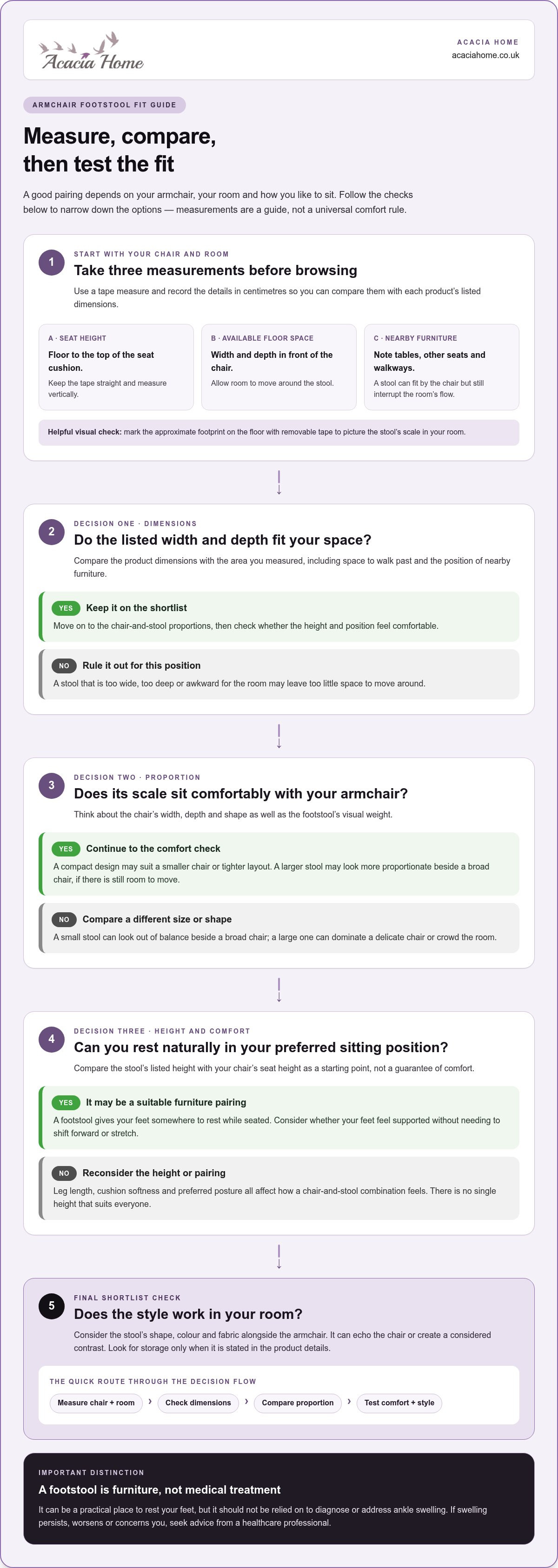
Once you’ve considered how you like to sit, take a few measurements before browsing. They won’t identify one perfect footstool, but they can help you rule out options that are too tall, too wide or awkward for your room. Compare the chair, the footstool and the space around them, then use comfort as your final guide.
Which measurements should you take before browsing?
Measure your armchair as it is, rather than relying on a general sizing rule. Use a tape measure and note:
Seat height: Measure vertically from the floor to the top of the seat cushion. Keep the tape straight and record the measurement in centimetres.
Available floor space: Measure the width and depth of the area in front of the chair where you expect the footstool to sit. Allow room to move around it.
Nearby furniture: Note the position of side tables, other seats and walkways. A stool may fit in front of the armchair but still interrupt the room’s natural flow.
Write the measurements together so you can compare them with product dimensions while browsing. If you’re considering a particular position, mark out the approximate footprint on the floor with removable tape. This makes it easier to picture the stool’s scale before you buy.
How can you assess footstool height and scale?
Compare a footstool’s listed height with your chair’s seat height as a starting point, not a guarantee of comfort. A lower footstool is often suggested for ergonomic comfort, but there is no single measurement that suits every chair or person. Leg length, cushion softness and preferred posture all affect how a pairing feels.
Check the listed width and depth against the area you measured, then consider proportion. A broad footstool may look at home with a generously sized armchair but overwhelm a smaller one. A very narrow stool, by contrast, can appear undersized beside a substantial chair. Think about visual weight too: the footstool’s shape and presence should sit comfortably alongside the armchair rather than compete with it.
Picture the position you would actually use. Would your feet rest naturally while you sit back, or would you need to shift forward or stretch? Photographs help you judge appearance, but dimensions give you a more reliable basis for comparing products. If swelling affects your comfort, don’t assume a particular stool height is medically ideal. Seek appropriate health advice about persistent or concerning symptoms.
These checks can help you narrow down a footstool for armchair uk homes without treating measurements as rigid rules. To consider how the piece will sit with other furnishings, browse Acacia Home’s indoor furniture range.
Which footstool style balances comfort, practicality and appearance?
With measurements in hand, think about the footstool’s role in the room. A compact design may suit a smaller armchair or tighter layout. A larger one may feel more proportionate beside a broad chair, provided there is still space to move around it. Neither size is automatically better. Consider how the stool will sit with your chair and how much floor area you want it to occupy.
Style matters too. A footstool is a visible piece of furniture, so its shape, colour and fabric can echo the armchair or create a considered contrast. Treat it as a companion piece, not simply a place to rest your feet.
Should you choose a standalone or storage footstool?
A standalone footstool offers a straightforward place to rest your feet, keeping the decision focused on fit and appearance. A storage footstool may offer an additional function, but rely on storage as a feature only when the product details specifically describe it. Don’t assume that every large or upholstered style opens up, or that its shape tells you how it can be used.
Start with what you need from the piece. If you mainly want a companion for your armchair, a simple design may be enough. If you would value another function, compare products that clearly state what they offer, alongside their dimensions and appearance. Either way, choose a footstool that works naturally with the chair rather than assuming it has a feature that is not listed.
How do shape, colour and fabric affect the room?
Look at the lines of your armchair. Rounded edges can complement a chair with soft curves, while a more angular shape may sit comfortably alongside straighter lines. These are starting points, not rules. Mixing shapes can add character when the pieces feel balanced in scale.
For colour, decide whether you want the footstool to blend in or stand out. A tone that relates to the armchair or nearby furnishings can create a coordinated look. A deliberate accent colour can make the seating area a focal point. Consider the room’s existing palette, including rugs, curtains and cushions, so the new piece feels connected to its surroundings.
Fabric also affects the footstool’s appearance. A smooth-looking finish may feel understated, while visible texture can add contrast and depth. Consider how each option relates to your armchair and the atmosphere you want in the room. Base your choice on the product details and your personal taste, not an assumption that a particular material or style offers a health benefit. For broader inspiration on form and function, explore this guide to versatile ottomans.
The best footstool for armchair uk homes will feel considered in both use and appearance. Let your chair’s proportions, the available space and the room’s character guide your shortlist. Then compare each option’s details rather than relying on style alone.
How can you shortlist the right armchair footstool before buying?
A shortlist helps you compare footstools based on what matters in your home, rather than being swayed by an appealing photograph alone. Keep your armchair measurements and available floor space close by as you browse. Weigh those practical details alongside the shape, colour and feel you want in the room. There is no guaranteed choice for every sitter, so use the information to narrow your options, not as a promise about comfort or ankle swelling.
What belongs on a practical footstool shortlist?
Compare the same details for each option to make a fair assessment. Keep a simple note of:
Chair and space: Your armchair’s seat height, plus the width and depth available in front of it.
Product dimensions: The listed height, width and depth, compared with your measurements.
Appearance: The footstool’s shape, colour and material information, considered alongside the chair.
Intended position: Whether its size and shape suit how you plan to rest your feet and the space around the chair.
Set aside options whose dimensions do not suit the available area or whose appearance feels at odds with the room you’re creating. This is a useful filter, not a strict formula. A footstool may look like a close match yet take up more space than you want.
How can you picture the footstool in your home?
Look beyond the armchair and consider the whole seating area. The footstool will sit among rugs, tables, other furniture and the colours already in the room, so picture how the complete arrangement will feel. If it is difficult to judge from a product image, use the listed dimensions to mark out its approximate footprint on the floor. This helps you assess its scale and whether it leaves the room feeling open.
Use your existing furnishings to decide whether you want the footstool to blend in or provide contrast. A coordinating colour can create a connected look, while a considered accent can draw the eye and add personality. Neither approach is inherently better. Think about the visual balance with your armchair and whether the piece suits the atmosphere you want at home.
For a broader view of how furniture can work together, explore Acacia Home’s indoor furniture. Acacia Home brings together hand-selected collections in contemporary and traditional styles, offering inspiration for a considered interior.
Once your shortlist feels right on paper and in the context of your room, browse Acacia Home’s footstools to explore options for your armchair. Let the product details, your measurements and your personal preferences guide the final choice.
Explore Acacia Home footstools for a considered armchair pairing
A well-chosen footstool does more than complete a place to sit. It gives you a place to rest your feet and adds character to the room. Acacia Home offers footstools alongside indoor furniture, with hand-selected collections spanning contemporary and traditional styles.
As you explore, keep the details you’ve considered in mind: how the footstool will sit with your armchair, how much room it will occupy and whether its appearance feels at home with your furnishings. Not every piece needs to match exactly. You might repeat a colour from elsewhere in the room, echo the chair’s silhouette or introduce a subtle contrast that feels true to your taste.
How can a footstool complement your existing furniture?
Think of the footstool as a functional accent within the wider room. A piece that relates to the armchair in scale can make the seating area feel composed, while a contrasting shape or colour can add interest. For a quieter effect, choose a complementary tone. For a focal point, consider a different colour. These are possibilities, not rules; let your existing furniture and personal preferences lead the decision.
Consider the view from across the room as well. How does the pairing sit alongside a rug, side table or other seating? If the armchair already has a strong presence, a more understated footstool may help balance the arrangement. If the room feels restrained, a distinctive accent could bring character. Choose what feels harmonious to you rather than following a formula.
What should you expect from Acacia Home’s curated approach?
Acacia Home’s team hand-selects furniture and décor collections, bringing together contemporary and traditional styles for a range of interiors. Product ranges are refreshed regularly, so the selection evolves over time.
As you browse, compare product details with your armchair and room. Use the stated dimensions to assess fit, and consider information about colour, shape or material alongside the photographs. Balancing practical checks with personal taste can help you choose a footstool for armchair uk homes that feels like a natural part of your interior, rather than an afterthought.
Ready to find a considered companion for your chair? Explore Acacia Home’s furniture and discover pieces that could complement your home and reflect your own style.
Make room for a more considered pairing
The right footstool should feel at home in your space, bringing a practical touch to your armchair while reflecting the details and atmosphere you love. As you explore a footstool for armchair uk homes, let your preferences guide the final choice. A harmonious pairing need not be identical, only thoughtfully chosen for your room.
Acacia Home is a family-owned business, with personal involvement in selecting its hand-picked furniture and décor collections. The range brings contemporary and traditional styles together, offering inspiration for different tastes and interiors. Choose a piece that speaks to you and feels at home with the furniture you already cherish.
Ready to find a new favourite for your living space? Explore Acacia Home’s hand-selected furniture and discover pieces to make your armchair corner feel more personal.
Frequently Asked Questions
Can a footstool help with swollen ankles?
A footstool can provide somewhere to rest your feet while you’re seated, but it should not be described as a treatment for swelling. Whether its height and position feel comfortable varies from person to person, so choose according to your preference rather than expecting a particular effect. If swelling is persistent, comes on suddenly or feels concerning, seek advice from an appropriate health professional, who can assess your situation.
What height should a footstool be for an armchair?
There is no single footstool height that suits every armchair or person. Measure from the floor to the top of your chair’s seat, then compare that figure with the footstool’s stated height. Use the comparison as a guide, not a guarantee. Your posture and preference also matter. Do not assume that any particular height is medically ideal.
Is a separate footstool better than an armchair and footstool set?
A separate footstool lets you pair a new piece with an armchair you already own, while a set creates a coordinated look from the outset. The better fit depends on your existing furnishings, available space and personal taste. For example, a standalone stool can introduce a contrasting accent beside a familiar chair. Neither option is inherently more comfortable or more suitable for swollen ankles; consider the individual pieces and your room.
How do I measure for a footstool in front of an armchair?
Measure your armchair’s seat height, then the width and depth of the floor area in front of it. Compare these figures with the listed height, width and depth of each footstool for armchair uk option you’re considering. Include nearby furniture and the route through the room, so the stool does not crowd a walkway. Measurements help you judge whether it fits, but cannot guarantee how it will feel to use.
Are storage footstools suitable for use with an armchair?
A storage footstool can combine a place to rest your feet with another function, provided the product details specify storage. Compare its stated dimensions and shape with your armchair and the available space, just as you would for any footstool. Read the product description rather than assuming storage from an image or style. Rely on that feature only when it is included in the specific listing you’re considering.
What should I do if my ankles remain swollen when resting?
Furniture can support a comfortable resting position, but it cannot identify or treat the reason your ankles are swollen. If the swelling persists, appears suddenly or feels concerning, seek advice from an appropriate health professional. They can guide you according to your circumstances. Avoid relying on a particular footstool to relieve symptoms or treating a change in how your feet feel as an explanation for the swelling.
Can I choose an armchair footstool to match my existing furniture?
Yes. You can choose a footstool that relates to your existing furniture without making every piece identical. Compare the armchair’s colour, silhouette and visual scale with the options, then consider nearby pieces such as a rug or side table. A similar tone can create a coordinated effect, while a contrasting detail may add character. Let your own taste guide the pairing; matching does not require bespoke or made-to-order furniture.
Comments