
End of bed bench uk
Updated: 21 hours ago
The widest bench isn’t always the best fit. An end-of-bed bench in the UK should generally be no wider than the bed frame. Consider its height too, along with the space left to walk around the room.
It’s easy to focus on a bench’s style, especially when a beautifully upholstered stool can bring softness and character to a bedroom. But the right choice needs to work in the space as well as look at home there.
This guide explains how to compare stool prices without losing sight of value, choose a width and height that suit your bed, and measure the walkway before deciding. You’ll also find out what to look for in a bench’s shape and purpose, so you can weigh up a practical storage option against a simple seat and choose with confidence.
Table of Contents
What price range do bed end stools fall into?
On the UK market, sampled bed-end bench prices range from £132 to £504, with a median of about £306. This snapshot draws on 14 prices collected from four sources on 10 November 2026. It gives a useful comparison point, not a fixed price for every stool. Design, materials, size and storage features all affect what a particular piece costs.
Check how each product’s price is presented. If a listing says the price includes VAT, note that alongside the amount shown. Don’t assume other charges are included: look for delivery or additional costs listed separately before comparing the total you’d pay. Keeping track of the price, VAT wording and extra charges helps prevent a low headline figure from seeming cheaper than another listing’s complete price.
Next, compare the features that matter in your bedroom. A bench with storage may be more practical than a simple stool, while a decorative upholstered design may suit a room where appearance matters most. Check the product description for dimensions, upholstery and construction details. If these differ, record the differences rather than treating price alone as evidence of better value.
A useful comparison can be made in three steps:
Set your spending limit against the market snapshot of £132 to £504.
Shortlist benches with a similar purpose, such as seating or storage.
Compare the displayed price, VAT wording and any separately listed charges.
The median of about £306 gives a midpoint for the sampled prices, not a recommended budget or promise of what a suitable bench will cost. A piece above that midpoint may have features or dimensions that better meet your needs; one below it may be simpler or smaller. Use the figures as context, then judge each product against its stated details and how it will work at the end of your bed. The market snapshot is valid until 10 December 2026.
These examples show why the sampled range is a comparison point, not a ceiling. Check each listing’s stated price and included costs against your requirements.
Bench width and height filters
Width and height filters can narrow your shortlist, but product measurements need careful reading. A filter may describe the whole bench, while a separate figure gives the usable seating area. Check what each measurement represents before comparing results. Otherwise, two benches may look similar in a search list but occupy different amounts of bedroom space.
Height filters can also group products rather than describe a precise fit. One market filter categorises standard benches as 56-81 cm tall. That span is useful for browsing, but it doesn’t tell you how high the seat sits. Overall height includes the legs and frame, so it can differ considerably from the height of the upholstered seating section.
The Large Brampton End of Bed Bench shows why those details matter. Its overall height is 77 cm, including legs measuring 31 cm. The upholstered section is 23 cm high. These measurements describe different parts of the same piece, so don’t treat the upholstered section’s height as the bench’s overall height or seating height.
For width, look for both the bench’s full measurement and any stated seating-area width. The Large Brampton End of Bed Bench has a seating area 103 cm wide. That figure describes the place to sit, not necessarily the full width from one outer edge to the other. If a listing gives several width measurements, use the overall figure when assessing how much floor space the bench will occupy.
Use these steps when applying filters and checking product details:
Choose a height range that suits the bedroom, then compare the listed overall height.
Look for separate figures for overall height, leg height and seating area.
Compare overall widths when judging a bench’s footprint; use seat width to assess sitting space.
Open the full product specifications before deciding that a filtered result fits.
A filter is a starting point, not a substitute for checking dimensions. For example, the 77 cm overall height of the Large Brampton falls within the 56-81 cm filter range, but its 31 cm legs and 23 cm upholstered section still tell you more about its proportions. Keep each measurement attached to the part it describes. That makes it easier to compare designs accurately and avoid choosing by a filter label alone.
A chenille upholstered ottoman bench that is 50 inches long offers a useful point of comparison when judging length. Before choosing a similar option, consider where its ends will sit in relation to nearby furniture and how much clear floor space you want to preserve. The listed length helps with that first check, but it should not be mistaken for a description of the seating area or the bench’s height.
When measurements use different units or labels, make sure you’re comparing like with like. The length can help you assess a bench’s footprint, while a separate seating measurement may better describe its usable surface. Consider the dimensions alongside the room layout and the bench’s intended position. This helps distinguish a promising search result from a piece that works comfortably in the space.
Placement and walkway space
In a small bedroom, check the walkway before choosing a larger bench. The space at the foot of the bed may look generous until furniture is in place. Measure the clear floor area between the bed and opposite wall, then compare it with the bench’s depth. This shows how much room will remain to move through the bedroom.
Measure from the foot of the bed to the nearest obstacle. Include wardrobes, drawers, radiators and the swing of the bedroom door. A bench might fit neatly when everything is closed, yet obstruct a drawer when it opens. Note the tightest point along the route, not just the widest patch of open floor.
Next, mark the proposed footprint on the floor with removable tape or a sheet of paper. Use the bench’s full depth and width, not just its seat area, to outline the space it occupies. Walk past the outline and approach the bed from both sides. If you usually carry laundry or change bedding there, mimic those movements too.
Measure the floor space from the bed’s foot to the nearest obstruction.
Account for doors, drawers and wardrobe access in their open positions.
Mark the bench footprint and walk around it before settling on a size.
Repeat the layout test with a smaller bench if the route feels awkward.
For example, a bench can sit centrally at the foot of the bed yet narrow the route to a wardrobe. Shifting it slightly may help, as long as it remains balanced with the bed and doesn’t block access from either side. In a compact room, a shallower design may preserve a more usable passage than a larger bench, even if the larger option offers more seating or storage.
Consider how the room works throughout the day, not just how it looks in a still arrangement. A clear route matters when making the bed, opening storage or walking across the room. If the tape outline catches your feet or makes a doorway awkward to use, adjust the position or footprint before choosing. A well-placed bench should feel integrated into the layout, rather than turning the end of the bed into an obstacle.
Finally, check the planned position from the bedroom entrance and beside the bed. These views reveal whether the bench interrupts the room’s natural route or makes it feel crowded. Prioritise a practical floor plan: once the walkway and access points work, the bench can add a considered finishing touch without compromising everyday movement.
Bed end stools and benches
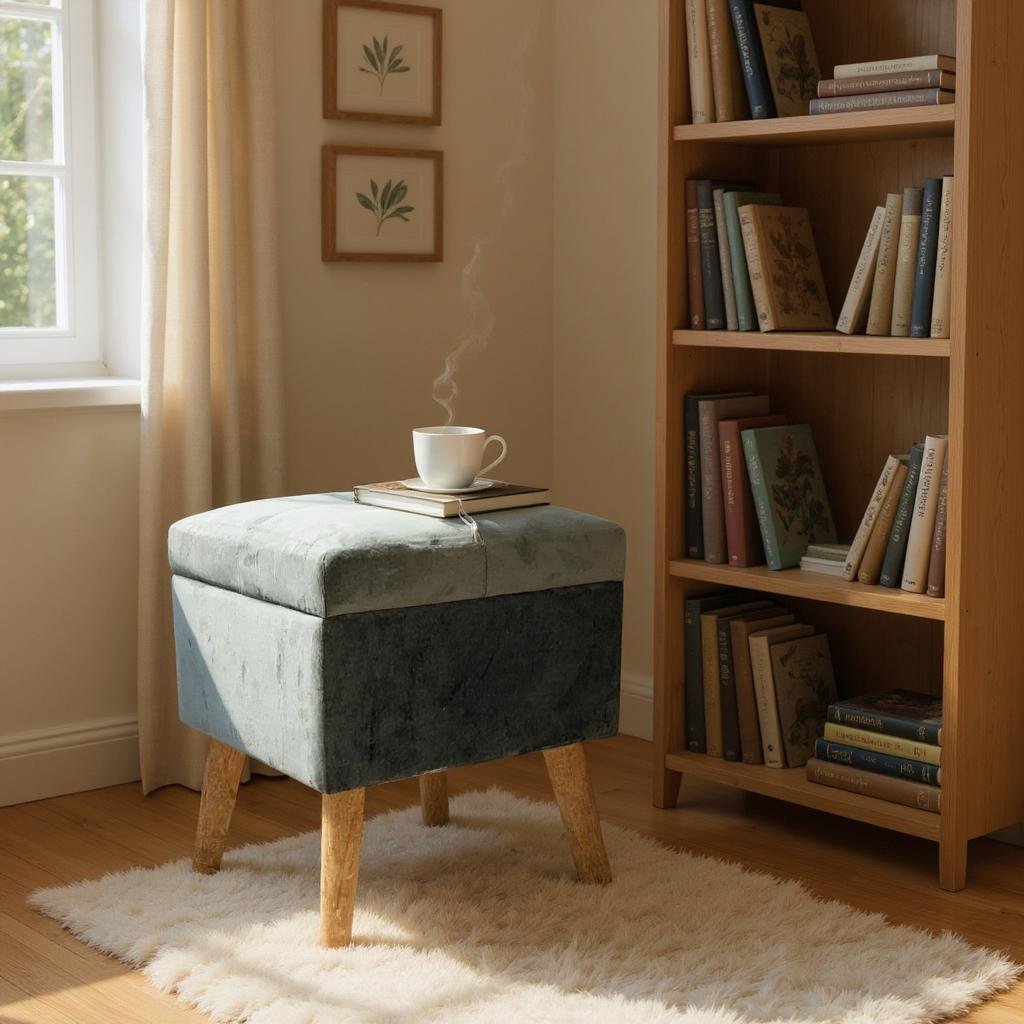
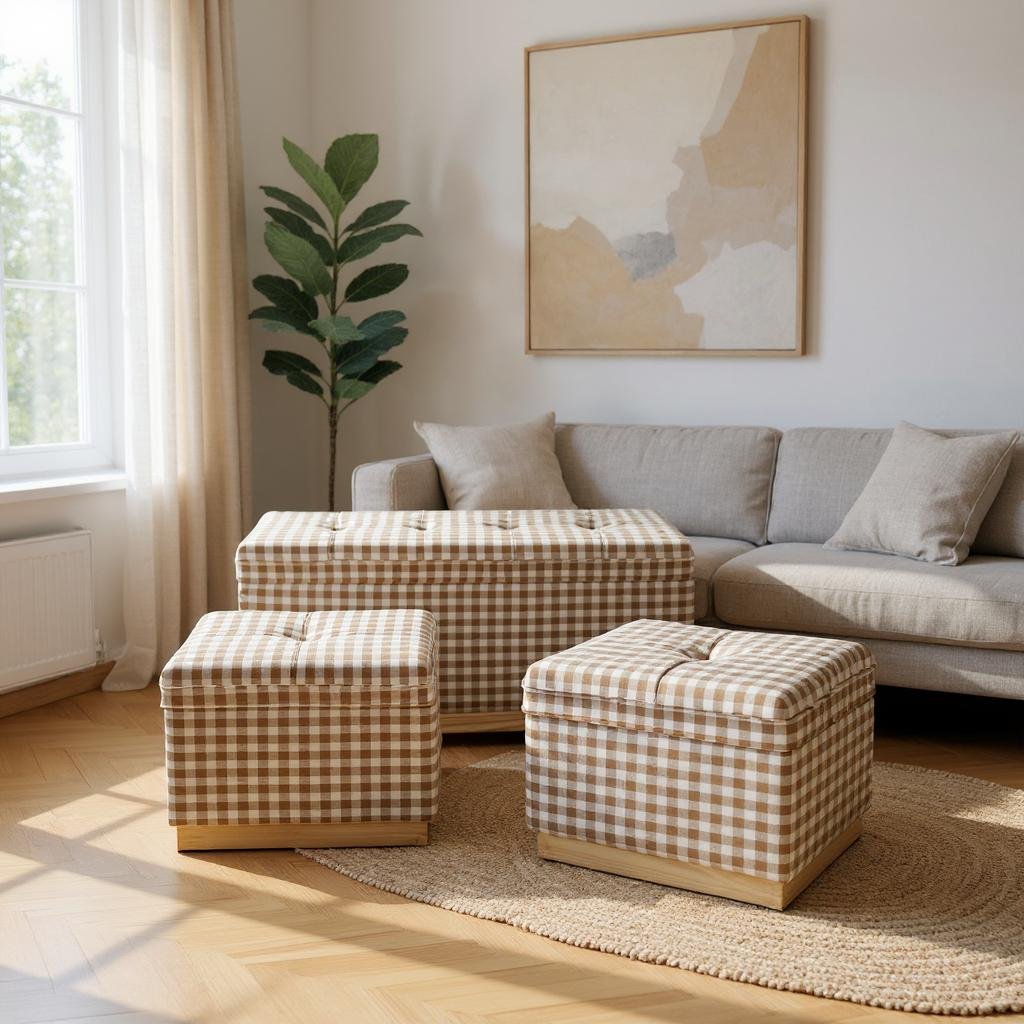
A stool, bench and storage ottoman can each serve a different purpose at the foot of a bed. A simple stool offers a place to sit, while a longer bench may provide more seating. A storage ottoman can combine seating or a footrest with concealed storage. Decide which function matters most before comparing designs, because appearance alone won’t tell you how useful a piece will be.
Storage can keep everyday bedroom items close at hand. Depending on its capacity, an ottoman may hold bedding, towels, books, toys, pillows, throws, shoes, bags, clothes, cleaning supplies or documents. Decide what you want to store first. Bulky bedding needs a different amount of interior space from shoes or books, and a storage lid needs room to open without obstructing nearby furniture.
Product examples show how names and styles vary. These prices describe distinct products, so compare their stated dimensions, materials and functions rather than assuming “bench” or “stool” always means the same design.
For seating: consider a stool or bench, then compare its usable seat area.
For storage: consider an ottoman or blanket-box style and what you’ll keep inside.
For a visual accent: compare upholstery, shape and detailing with the bedroom.
Capacity is another distinction worth understanding. One chenille upholstered ottoman bench has a stated capacity of 300 lbs. Treat a capacity figure as a product-specific detail, not a standard for every bench. Check the individual product description for its stated limits and construction information, particularly if several people may use the seat.
Finally, weigh practical features against the room’s layout. A storage lid may need clearance; a longer seat may offer more sitting space but occupy more floor area. Product names such as “blanket box” or “bed end stool” offer useful clues, but dimensions and listed functions give the clearest basis for comparison. Choose the type that supports your bedroom routine, then check that its footprint suits the space.
Choosing a bench size
Start with the bed frame’s outside width and use it as your upper limit. A bed-end bench should generally be no wider than the frame, which helps prevent the sides from overhanging. Measure the frame itself, not just the mattress, as the frame may extend beyond it. This gives you a practical maximum when comparing product dimensions.
Next, separate the bench’s overall width from its seating width. The Large Brampton End of Bed Bench measures 115 cm wide, with a seating area 103 cm wide. Those figures describe different things: the overall width determines its footprint, while the seat measurement indicates usable sitting space. Compare overall dimensions with your bed, and use seating dimensions to judge comfort.
Depth matters just as much as width. The Large Brampton bench is 48 cm deep, so its front-to-back measurement is the figure to compare with the floor space available at your bed’s foot. A bench that matches the bed’s width can still feel too substantial if its depth dominates the room. Consider the bench’s shape too, since a broad, solid base can appear heavier than a more open design.
Use this measuring sequence before settling on a size:
Measure the bed frame across its widest points.
Record the clear floor depth available beyond the bed.
Compare both measurements with the bench’s full width and depth.
Check the seating area separately if regular use matters.
Allow for how a design is made. Upholstery can affect finished dimensions: the Large Brampton bench has an upholstery tolerance of plus or minus 1 cm. Treat that as a product-specific allowance, rather than assuming every upholstered bench has the same tolerance. If a size sits close to the limit of your available space, even a small difference may affect the fit.
Finally, consider visual proportion as well as measurements. A long bed can make a compact stool look modest, while a narrow frame may be overwhelmed by a broad bench. Picture the outline at the foot of the bed, then compare its width with the frame and its depth with the available floor space. The most useful size balances a comfortable seat with a footprint that suits the room.
Once you’ve measured, explore the indoor furniture selection to consider how other pieces might sit together in your room.
Acacia Home
Acacia Home offers a considered range of seating to help you shape a bedroom that feels cohesive. Once you’ve measured your bed and walkway, explore occasional chairs, footstools, chaise longues and window seats as complementary options for the room. They serve different purposes, so your measurements and priorities can guide what suits the wider space. For help exploring the available seating, contact Acacia Home.
Make your bedroom feel complete
Choosing an end-of-bed bench in the UK is also an opportunity to consider the room as a whole. The right piece should support your daily routine and complement the atmosphere you want to create, rather than feeling like an afterthought.
As you shape the wider space, Acacia Home’s occasional chairs, dining chairs and footstools offer further seating options to consider alongside your bedroom’s character. Each has a different role, so keep your priorities clear and choose pieces that feel harmonious without crowding the room.
With your measurements and preferred use in mind, you can move from browsing to a more confident decision. Let practicality guide the choice, then look for a design that brings warmth and personality to your home. Contact Acacia Home for help as you consider what might suit your space.
Frequently Asked Questions
How do I know what size bench will fit my bed?
Compare the bench’s full footprint with your bed frame and available floor space. Measure the frame at its widest points, then check the bench’s overall width and depth in its product details. For example, a bench may fit the bed’s width but extend too far towards a wardrobe or doorway. Consider the route around the bed as well as the space the bench occupies.
What's the difference between a bed end stool and a bed bench?
A bed-end stool is usually a compact seat, while a bench is generally longer and can provide more seating space. Names aren’t a reliable guide to every design, so check the product’s shape and measurements. An ottoman bench adds storage, which can suit spare bedding or throws. A simple upholstered stool may be a better fit when you only need occasional seating.
What size end-of-bed bench should I choose for my bed in the UK?
Choose a bench no wider than the bed frame, then consider its depth and intended use. Measure the frame rather than relying on the mattress size, as the frame may project beyond it. If you want two people to sit comfortably, prioritise the usable seating area; for a decorative accent, a smaller piece may suit the room better.
How much do end-of-bed benches cost in the UK?
Market prices in the UK sample ranged from £132 to £504, with a median of about £306. Treat this as a comparison point, not a guaranteed price for every style. Prices vary with a bench’s materials, size, upholstery and features such as storage. Compare products with similar purposes, and include any separately listed delivery charges when considering the total cost.
How much clearance should I leave between a bed and an end-of-bed bench?
Leave enough space to walk past comfortably and use nearby furniture without obstruction. The right clearance depends on the room layout, the bench’s depth and whether drawers or doors open into the gap. Mark the proposed footprint on the floor, then try opening drawers and walking around it. If the route feels awkward, consider a shallower bench or a different position.

Comments