
Glass Table Lamps for UK Bedrooms and Living Rooms
Yes, glass table lamps can be a lovely choice for bedrooms, adding a decorative touch without making a restful room feel visually heavy. For glass table lamps in UK homes, clear or coloured glass, a simple silhouette and a neat shade can help the lamp complement your existing style.
It’s easy to see the appeal: glass catches the eye, yet a well-chosen shape can feel light and quietly elegant. In a bedroom, pair it with calm linens, warm metallic accents or natural wood. In a living room, use a table lamp to add softer light for reading, relaxing or unwinding in the evening.
This guide will help you decide whether glass suits your bedroom, choose a lamp for your living room, and consider which bulb to use and how to position the lamp. Practical details, such as measuring the available space, can help you choose a lamp that works well in everyday use as well as looking good at home.
Table of Contents
Are glass table lamps a good choice for bedrooms?
Yes. A glass table lamp can add a decorative finish while keeping a bedroom visually light, especially alongside simple linens, natural wood or warm metallic accents.
Glass colours and finishes
Choose clear glass for a quiet, airy effect, or coloured glass when you want the lamp to add a distinct accent. Compare the glass with nearby bedding, curtains and furniture so the finish works with the room rather than in isolation.
For example, an amber-toned base can pick up warm details in a room, while clear glass sits neatly with pale linens. Keep surrounding patterns simple if the glass has a noticeable colour or finish.
Base and shade styles
The base and shade work together: a rounded or gently curved glass base can soften angular bedside furniture, while a simple silhouette suits a modern scheme. A neat shade keeps the overall look composed, particularly beside patterned wallpaper or layered bedding.
Compare the lamp’s proportions with the bedside table and headboard. A broad shade can crowd a narrow table, so measure the available surface and space above it before choosing.
Lamp materials and designs
Glass table and desk lamps come in varied designs, from clear bases with restrained shapes to coloured glass with a more decorative presence. For a calm bedroom, pair a simple glass base with natural wood and uncomplicated linens. For a stronger focal point, echo the glass colour in a cushion or another small accent.
Consider the full composition, not just the base. Metal details can complement warm metallic accents, while a clean-lined form can suit modern furniture without dominating it.
To choose a lamp, first decide how you’ll use it. A bedside table lamp can contribute to a restful evening setting, while a glass desk lamp can add a decorative touch to a work or reading corner. Its intended position helps you choose a suitable shape and scale.
Next, compare the lamp with the colours and finishes already in the room. A clear base can blend with several schemes; a coloured one can create a considered accent. Finally, measure the table and the space above it, then check that the base and shade leave room for the everyday items you keep nearby. These simple steps help glass table lamps in UK bedrooms feel both thoughtfully styled and practical.
Glass bedside lamps can keep bedrooms feeling light and restful while adding a decorative finish. They work particularly well when the rest of the bedside setting feels composed, allowing the glass to add interest without making the room feel visually heavy. Consider how the finish sits with nearby linens, furniture and other accents, so the lamp complements the room’s overall look.
Glass lamps for bedrooms
A glass lamp can add character to a bedside setting without crowding the furniture. For a calm scheme, choose a clear base and simple shade; for a stronger accent, let coloured glass echo a cushion, curtain or painted detail. The right choice depends on the room’s palette and the space available beside the bed.
Start with placement. A bedside lamp should leave room for essentials such as a book, glasses or a glass of water. Measure the table’s width and depth, then compare them with the lamp’s base and shade. Consider the headboard’s height and nearby shelves too, so the lamp sits comfortably in the arrangement rather than competing with them.
Glass finishes create different moods. Clear glass keeps the base visually unobtrusive and works with pale bedding, natural wood or a restrained colour scheme. Coloured glass creates a focal point: amber tones can complement warm details, while cooler shades can relate to blue or grey textiles. Compare the lamp with the actual fabrics and finishes, as daylight can change how colours appear.
Think about the whole bedside arrangement, not just one lamp. Matching lamps on either side of a bed can create a balanced, coordinated look, particularly with a centred headboard. If the tables differ in size or the room is asymmetrical, choose related designs instead, such as clear glass bases with similar shades. This creates a visual connection without requiring a mirrored arrangement.
Shade shape affects the lamp’s presence. A neat, plain shade can offset a decorative glass base, while a distinctive base may suit a simpler shade. On a compact bedside table, avoid a combination that leaves little usable space. In a larger bedroom, a taller silhouette can balance substantial furniture, such as a high headboard or broad chest of drawers.
For a considered choice, use this sequence:
Identify the lamp’s position, such as beside the bed or on a dressing table.
Measure the available surface and the clearance above it.
Choose clear glass for a quieter effect, or coloured glass for an accent.
Compare the base and shade with nearby fabrics, wood and metal finishes.
Check that everyday items still have a place on the table.
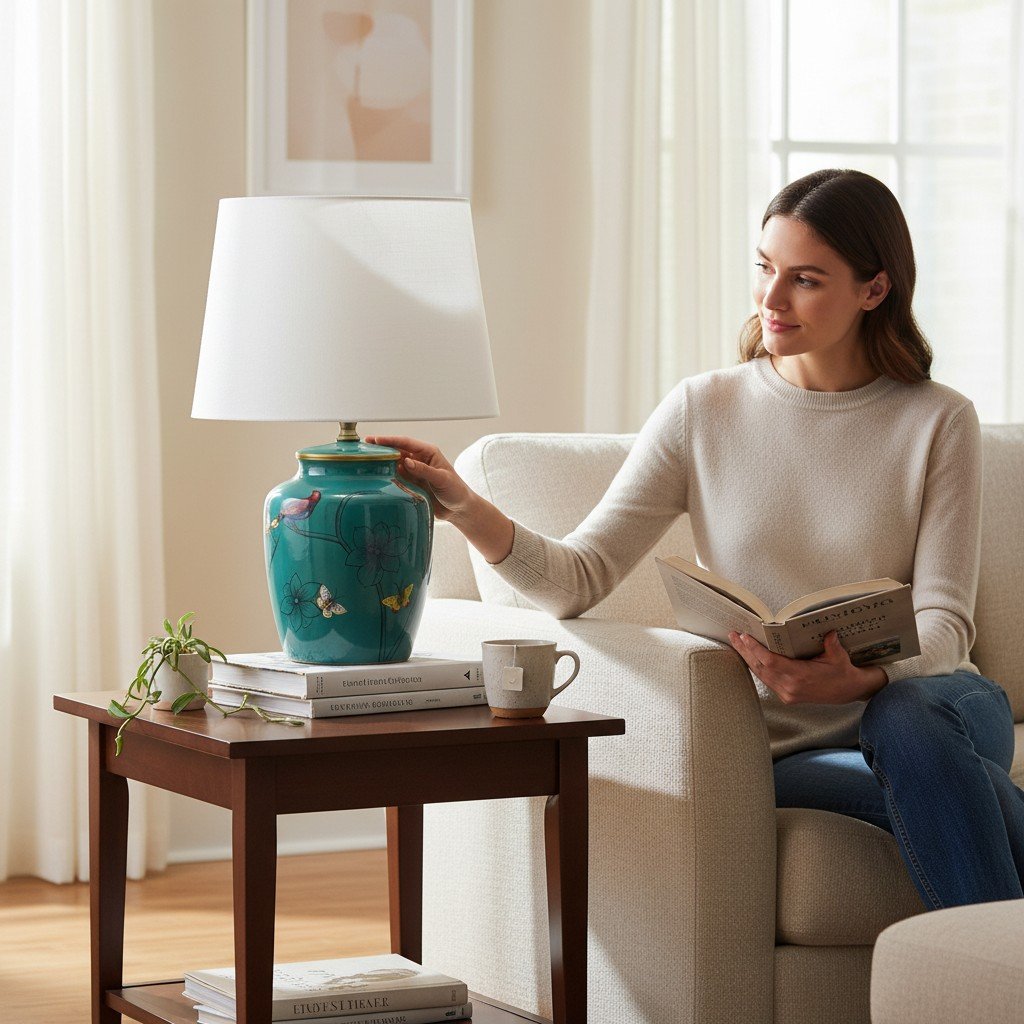
Glass designs can also suit a bedroom reading corner. Place a table lamp on a side table beside an occasional chair, choosing a shape that relates to the furniture without matching every detail. This creates a pool of light for reading or winding down while keeping the bedside arrangement clear.
Glass lamps for living rooms
In a living room, a glass table lamp adds a softer layer of light for reading, relaxing or winding down. Its base can also become a decorative detail on a side table, console or shelf. Choose the position first, then consider how the lamp’s shape and finish relate to the surrounding furniture.
A side table beside an occasional chair is a practical spot for a reading lamp. Place it within easy reach while leaving space for a book or cup. On a console behind a sofa, a lamp can bring warmth to the room’s perimeter. A pair can frame a fireplace or a wide piece of furniture, creating a balanced arrangement.
Let the room’s layout guide the scale. A compact table between two chairs suits a smaller base, while a broad console can accommodate a taller, more expressive design. Measure the surface and space above it before choosing. Check that the shade won’t feel crowded beneath shelves or dominate nearby artwork.
Glass works with a range of living-room schemes because it can feel visually light beside substantial furniture. Clear glass can sit comfortably with dark wood, pale upholstery or metallic details. Coloured glass offers a focal point: amber can pick up warm cushions, while a green or blue accent can echo a rug. Repeat the colour in one or two details rather than matching every accessory.
Consider the lamp’s silhouette alongside the room’s existing shapes. A rounded glass base can soften a room filled with straight-lined furniture, such as a rectangular coffee table and modular sofa. A tall, narrow design can complement vertical features, including floor-length curtains or a bookcase. Pair a decorative base with a simple shade when the room already has patterned fabrics.
Think about how the living room changes through the day. A table lamp can provide local lighting in the evening without relying solely on a central ceiling fitting. Position it near a reading chair for focused use, or across the room from another lamp to spread light through the space. Keep the cable route clear of walkways and seating legs.
For a cohesive finish, bring the lamp into conversation with nearby materials. Glass alongside a ceramic vase, a metal picture frame or a concrete surface creates contrast without requiring identical finishes. Explore glass lighting designs to compare different decorative approaches for a living-room setting.
Bulbs included
Whether a bulb comes with a glass table lamp depends on its product listing. Before buying, look for a clear statement such as “bulb included” or “bulb not included”. If the listing names a bulb type or fitting, use that information when choosing a replacement. This simple check helps you know whether the lamp is ready to use when it arrives.
Start with the product details, then match the bulb to the specified fitting. Screw and bayonet fittings are different, so choose a bulb that matches the lamp’s fitting. If you already have a bulb, compare its base with the fitting description. The lamp’s label or instructions can also identify its requirements.
Next, check the maximum wattage stated for that particular lamp. Wattage describes the power drawn by the bulb, so follow the lamp’s stated limit rather than choosing by brightness alone. If the lamp lists a maximum wattage, select a bulb within that limit. This limit applies to the individual lamp, not to glass table lamps as a whole.
Brightness and colour affect the bedroom’s atmosphere. A warm-toned bulb can suit a quiet bedside setting, while brighter, clearer light may be useful on a dressing table. Consider what you do in that spot: reading, getting dressed or creating a softer evening mood. The glass and shade also influence how the light appears across the room.
LED bulbs come in different shapes and light colours, so compare the bulb’s shape with the shade opening. A bulb that protrudes below a small shade can distract from the lamp’s silhouette. In an open glass design, the bulb is visible and becomes part of the styling. Choose a shape that sits neatly within the base and shade.
Before switching on a newly assembled lamp, follow its instructions and make sure the bulb is seated securely. Keep the lamp on a stable surface, with the cable away from bedding and walkways. When replacing a bulb, switch the lamp off first and allow a recently used bulb to cool. These steps make routine use straightforward.
Use this quick sequence when comparing bedroom lamps:
Read the listing to see whether a bulb is included.
Match the bulb fitting to the lamp’s stated fitting.
Stay within the maximum wattage printed for that lamp.
Choose brightness and colour to suit the task and room mood.
Check that the bulb’s shape works with the shade opening.
That way, the bulb supports the lamp’s everyday purpose and the calm, considered look of your bedroom.
Decorative and practical uses
A glass table lamp can serve as both a light source and a decorative accent. In a sitting room, place one beside a sofa to create a comfortable pool of light for reading or relaxing. In a bedroom, a smaller design can sit on a bedside table, while a hallway console gives a lamp a welcoming role near the entrance.
Match the position to the activity. A lamp beside an armchair is useful for evening reading, while one on a sideboard can soften the room’s overall feel. In a dining space, a table lamp on a nearby console can add gentle background lighting without taking up space on the dining table. Decide on the lamp’s purpose before choosing its position.
Use glass to balance heavier furnishings. A transparent base can sit neatly beside a substantial wooden bookcase or dark side table, adding detail without making the arrangement feel visually dense. A coloured glass base can bring a distinct accent into the room. Repeat its tone in a cushion or vase rather than matching every accessory.
Think in layers of light. A ceiling fitting provides general illumination, while a table lamp creates a more localised, relaxed setting. In a sitting room, placing a lamp near a reading chair gives that corner its own purpose. A second lamp across the room can distribute softer light and help connect the seating arrangement.
Choose the surface with daily use in mind. A narrow console may suit a compact base, while a broad sideboard can accommodate a more prominent lamp. Leave room for nearby essentials, such as a book beside an armchair or keys on a hallway table. A stable, uncluttered position also helps keep cables away from busy walkways.
Before settling on a spot, consider how the lamp looks in daylight and after dark. In daylight, a clear glass base can blend into a bright room; after dark, its shape becomes part of the illuminated setting. A coloured design may stand out more in either light, so assess it alongside nearby fabrics and finishes.
Reading: place a lamp close to an armchair or sofa.
Welcoming a hallway: use a console table near the entrance.
Adding atmosphere: position a lamp on a sideboard or occasional table.
Supporting a dining area: place it on a nearby surface, not the dining table.
For a considered finishing touch, browse glass lighting designs and consider how each shape might work across your home.
Acacia Home: Occasional Chairs
Acacia Home offers occasional chairs and other seating to help complete a thoughtfully arranged room. Once you’ve chosen a glass table lamp, consider how it will sit alongside a reading chair, footstool or chaise longue. A coordinated corner can bring together soft lighting, a comfortable place to sit and a practical surface for a book or cup.
In a living room, an occasional chair can create a distinct reading spot, while a footstool offers a place to rest your feet. Dining chairs, chaise longues and window seats offer further ways to shape comfortable spaces around your home. Choose a piece that suits the room’s purpose and existing furniture, then consider how the lamp’s scale and finish complement it.
Explore Acacia Home’s furniture, or contact Acacia Home to discuss your next step.
Make your next room choice feel considered
Choosing glass table lamps in the UK is part of shaping how a room feels after dark, not simply filling an empty surface. Picture the whole corner: the lamp, the seat beside it and the small details that make the space inviting. A comfortable chair can turn a pool of light into a favourite place to read or unwind.
Acacia Home offers Occasional Chairs, Dining Chairs and Footstools to help you bring your home together. Explore its glass lighting and seating with your room’s character in mind, whether you’re refreshing one corner or considering a wider change.
Contact Acacia Home about glass lamps, and take the next step towards a home that feels distinctly yours.
Frequently Asked Questions
What types of glass table lamps are available in the UK?
Glass table lamps come in clear and coloured designs, with varied base shapes and shade styles. Options include bedside lamps, living-room accent lights and desk lamps. A clear base can keep a room’s look understated, while coloured or patterned glass creates a stronger decorative feature. Compare the lamp’s overall height and shade with its intended surface, especially beneath a shelf or beside other objects.
How do glass table lamps compare with ceramic or metal lamps?
Glass, ceramic and metal create different visual effects. Clear glass can feel light and let surrounding colours remain visible; coloured glass adds a noticeable accent. Ceramic often brings a solid, opaque shape, while metal can make a lamp’s finish a defining feature. Choose by considering the room’s existing materials and the effect you want. For example, glass can soften the look of a dark wooden side table.
What bulb type and fitting do UK glass table lamps use?
There isn’t one bulb type or fitting shared by all glass table lamps in the UK. The correct choice depends on the individual lamp, so read its product details and instructions for the fitting and maximum wattage. When replacing a bulb, match its base to the lamp’s fitting, then choose a suitable brightness and light colour. Also check whether the bulb is included before expecting the lamp to be ready to use.
Are glass table lamps safe and suitable for bedrooms and living rooms?
Glass table lamps can suit both rooms when placed on a stable, appropriately sized surface and used according to their instructions. In a bedroom, position one where bedding or bedside items won’t knock it. In a living room, keep it clear of busy walkways and arrange its cable neatly. In either setting, choose a scale that suits the furniture and leave enough space for the lamp to sit securely.
Comments