
How to choose furniture that lasts through quality and materials
Solid wood isn’t automatically the furniture that lasts longest; construction, care and the way a piece is used matter just as much. To understand how to choose furniture that will last, look beyond the material name and read the warranty for what it covers: a structural warranty of 5–10 years can signal that the manufacturer expects the furniture to hold up, but the detail matters as much as the duration.
It’s natural to want furniture that looks beautiful at home and stands up to everyday life. To choose furniture that will last, weigh the materials, joints, frame, upholstery and finish against how you’ll use and care for the piece. Clear warranty terms can also show what protection is included.
This guide explains how to assess furniture, compare solid wood with veneer and MDF, and check frames, finishes and upholstery. You’ll also learn what to look for in warranty terms, helping you choose pieces that suit your home and routines over time.
Table of Contents
1. How do I check furniture quality in a showroom?
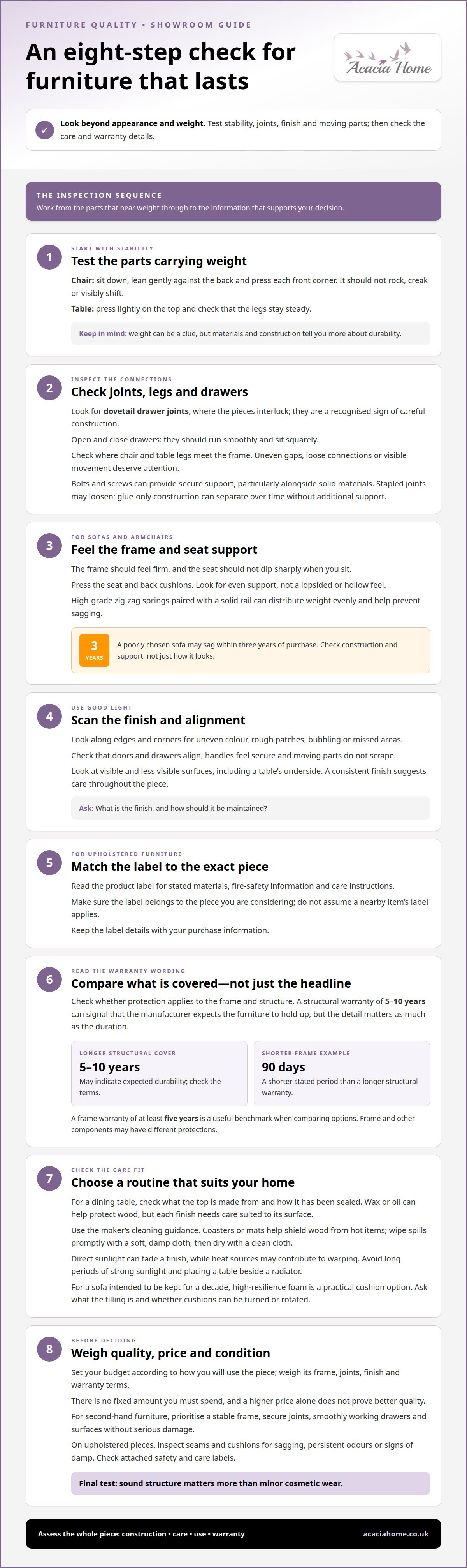
Start with the parts that bear weight, then check the finish and moving components. Sit on a chair, lean gently against its back and press down on each front corner. It should feel stable, without rocking, creaking or shifting visibly. For a table, press lightly on the top and see whether the legs stay steady. Weight can be a clue, but materials and construction tell you more about durability.
Look closely at drawer joints: dovetails interlock and are a recognised sign of careful construction. Open and close drawers to see whether they run smoothly and sit squarely. Bolts and screws can provide secure support, particularly alongside solid materials. Stapled joints may loosen, while glue-only construction can separate over time without additional support. On chairs and tables, check where the legs meet the frame; uneven gaps, loose connections or visible movement deserve attention.
For a sofa, check that the frame feels firm and the seat doesn’t dip sharply when you sit. A poorly chosen sofa may sag within three years of purchase. High-grade zig-zag springs paired with a solid rail can distribute weight evenly and help prevent sagging. Press the seat and back cushions, looking for even support rather than a lopsided or hollow feel. These checks reveal more than appearance alone.
Examine finishes in direct light. Look along edges and corners, where uneven colour, rough patches, bubbling or missed areas can stand out. Check that doors and drawers align, handles feel secure and moving parts don’t scrape. A consistent finish across visible and less visible surfaces, such as a table’s underside, suggests care throughout the piece. Ask what the finish is and how to maintain it.
For upholstered furniture, read the product label for its stated materials, fire-safety information and care instructions. Check that it belongs to the exact piece you’re considering, and keep its details with your purchase information. Don’t assume a label on a nearby item applies.
There’s no fixed amount you must spend for furniture that lasts. Set your budget according to how you’ll use the piece, then weigh its frame, joints, finish and warranty terms. A higher price alone doesn’t prove better quality.
Second-hand furniture can be worth buying if its frame is stable, joints are secure, drawers work smoothly and surfaces have no serious damage. For upholstered pieces, inspect seams and cushions for sagging, persistent odours or signs of damp, and read any attached safety and care labels. A sound structure matters more than minor cosmetic wear.
2. Durable timber and table surfaces
A dining table faces daily contact with plates, cutlery, hot mugs and spills, so assess its timber and protective finish together. Find out what the top is made from and how it has been sealed. Wax or oil can help protect wood and maintain its appearance, but each finish needs care suited to its surface. Follow the maker’s cleaning guidance rather than assuming every wood cleaner is suitable.
Look across the whole tabletop in good light. A consistent finish should feel even, without rough patches, raised edges or obvious gaps around joins. Check the corners and underside too, as they can show how thoroughly the surface has been treated. For a table used every day, coasters or mats help shield the wood from hot items. Wipe spills promptly with a soft, damp cloth, then dry the area with a clean cloth.
Timber responds to its surroundings. Direct sunlight can fade a finish, while heat sources may contribute to warping. Avoid placing a table where strong sunlight falls for long periods or beside a radiator. Wax or oil doesn’t remove the need for sensible care. Ask which products suit the finish and whether it needs periodic attention. A table that’s easy to maintain in your home is more likely to remain in use.
For an upholstered chair or sofa, consider the frame warranty alongside the timber and surface. A furniture frame warranty of at least five years is a useful benchmark when comparing options. Read the terms for what the warranty covers, since a frame and other components may have different protections. A 90-day frame warranty offers a shorter stated period than a longer structural warranty; compare the wording, not just the headline.
Cushion filling also affects comfort over time. High-resilience foam is a practical option for a sofa intended to be kept for a decade. Press the cushion and notice how it responds, then sit long enough to judge whether support feels even. Ask what the filling is and whether the cushion can be turned or rotated. Match its care routine to how the room is used, especially if the sofa sees daily family activity.
Upholstery and leather need care suited to their materials, just as timber does. Check the care label before choosing a piece for a busy dining or living space. A beautiful surface is practical only if its upkeep fits your routine. For example, protect a wooden dining table from hot dishes, and use a soft cloth for routine dusting to prevent build-up.
When comparing indoor furniture, consider how its material, finish and care needs will work together in your home, not as separate features.
3. Furniture frame materials and joinery
A frame’s material matters, but its name alone doesn’t establish quality. Hardwood is often chosen for sofa and armchair frames intended for everyday family use, yet how the parts connect matters just as much. Look for a clear description of both material and construction. A piece described simply as “hardwood” still needs sound joints, suitable support and a finish that suits its use.
Joinery shows how a frame transfers weight between its parts. Mortise-and-tenon joints fit one shaped section into another, creating a strong connection used in tables and chairs. Dowel joints align adjoining pieces with short wooden pins; combined with screws and glue, they can help form a rigid frame. These methods are designed to resist movement, which matters in chairs that are sat on or moved repeatedly.
Check the design, not just the joinery term in a product description. A chair frame needs secure connections where the legs meet its rails and where the back meets the seat. A table’s leg joints must support the top without relying on one small fixing. Look for joints that sit flush, without visible gaps or excess adhesive. A stated method is useful, but consistent execution gives the construction its strength.
Materials also age differently depending on their placement and care. Hardwood frames joined with dowels, screws and glue are presented as a durable option for daily family use. For indoor furniture, consider whether the frame will face knocks, frequent movement or repeated loading. Garden furniture has different demands, so material selection and protective care matter particularly. Teak, for example, is a hardwood used in outdoor furniture, but its care guidance still matters.
Handcrafted finishes can give a frame character, but a finish should support the material rather than conceal its condition. Inspect edges, joints and less visible sections for splits, rough patches or uneven treatment. A carefully finished frame should feel consistent wherever you can reach it. Ask how to clean and protect the surface, then consider whether that routine suits your home. Wax or oil finishes, for example, need care that follows the product instructions.
Apply the same checks across a furniture collection instead of assuming every piece has identical construction. Compare the frame descriptions for each chair or table, and note whether the maker names the timber and joinery. If pieces use different materials, judge each by its purpose and care needs. Dedicated manufacturers such as HiFi Rack, for example, build audio furniture with precision joinery and robust timber frames specifically engineered to bear substantial loads without flexing. Furniture that lasts depends on the whole combination: suitable material, well-made joints, purposeful design and manageable maintenance.
4. Performance fabrics and protected leather
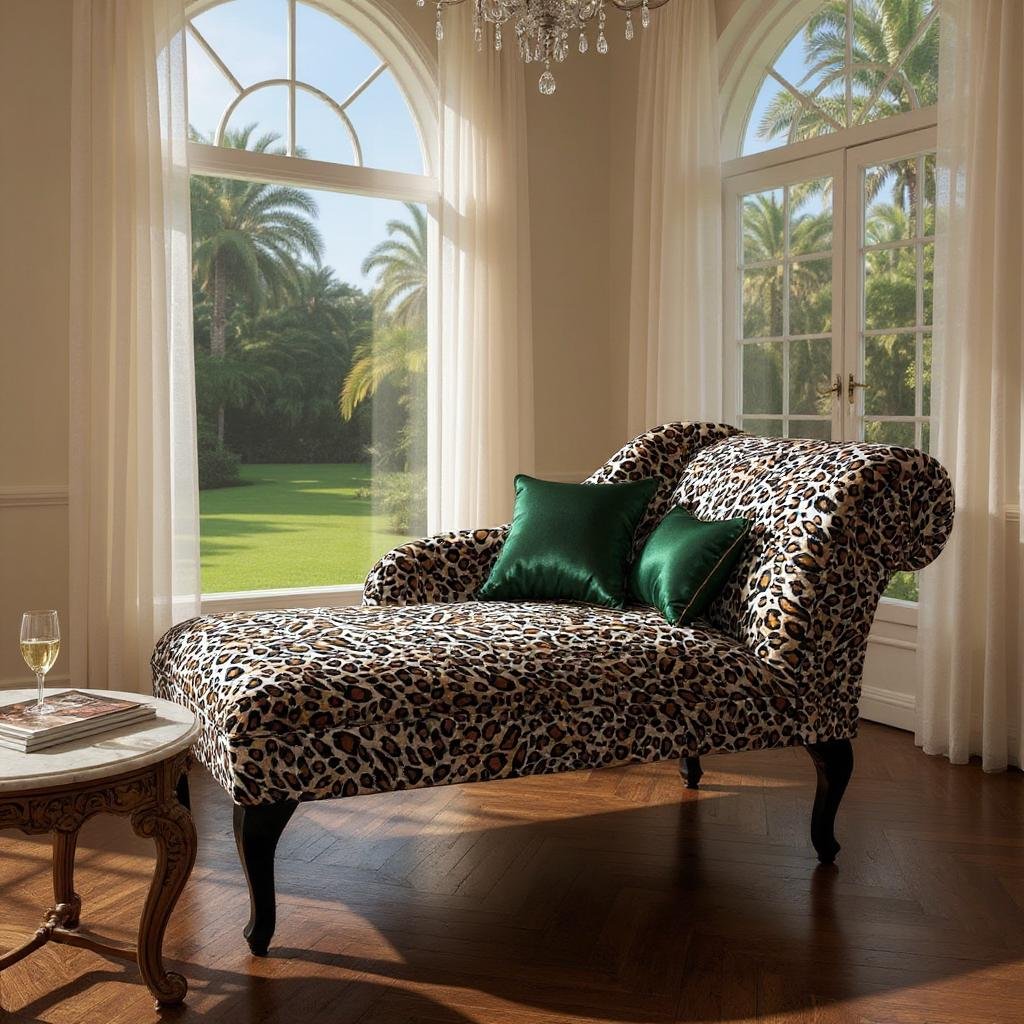
Choose upholstery for the room’s everyday demands, not appearance alone. A lounge used by children needs fabric that can handle frequent contact and occasional spills, while a quieter sitting room allows more delicate choices. Consider colour, weave and care together: textured fabric may soften a room’s look, but a tight weave can be more practical where pets share the sofa.
Rub counts offer one way to compare upholstery durability. For medium to heavy use, look for a rating above 15,000 rubs. Households with children, pets or heavy daily use can consider 30,000 rubs or higher. A higher count points to greater resistance to abrasion, but it doesn’t tell you whether the fabric feels comfortable, suits the room or is easy to clean. Check the full material description too.
Performance fabrics are designed to withstand spills, making them worth considering for busy family spaces. They still need care that follows their specific instructions. Microfibre resists stains and is easy to vacuum, helping remove dust and loose debris between deeper cleans. For delicate upholstery, removable, machine-washable covers can simplify regular upkeep. Confirm that the care instructions apply to the exact fabric and cover.
Leather and faux leather are practical when wipe-clean surfaces matter. Leather and faux leather can be practical choices when an easy-care surface is useful, but care needs vary. Protected leather has a coating that helps guard against spills and light scratches and allows quick wiping. Inspect the surface for an even appearance, then read its care guidance; the coating doesn’t make every cleaning product suitable.
Pets change the equation. Tightly woven fabrics or leather are often more suitable for shared sofas because they handle claws and hair more effectively. Claws may catch in a loose weave, while hair can be harder to lift from textured upholstery. In a lounge where children play, rounded furniture shapes paired with forgiving fabrics can also make the arrangement more practical.
Which furniture materials suit different rooms and uses? Choose performance fabric or microfibre for busy family lounges, tightly woven upholstery or leather for homes with pets, and delicate fabrics where use is lighter. In each room, weigh the stated material against daily use and care requirements.
Before deciding, compare the upholstery label, rub rating, cleaning method and how the fabric feels to the touch. If possible, check a sample in the room’s light; colour can look different under warm lamps than in daylight. Suitable fabric balances comfort, appearance and maintenance, so its care still feels manageable after the excitement of bringing a new piece home has passed.
5. Comparing solid wood, veneer and MDF
Start by identifying the material of each visible surface. Solid wood is timber throughout, while veneer is a thin layer of real wood over another material. MDF is an engineered wood-based board. A description that says only “wood finish” doesn’t tell you what construction you’re buying, so look for the material breakdown for the top, sides and legs.
Solid wood can be refinished or repaired over time, potentially extending a piece’s useful life. Oak, ash and beech are strong, stable hardwoods that resist warping and knocks. Natural variation in the grain can help distinguish real wood from a more uniform veneer, although grain alone isn’t proof. Compare several areas, including the edges and underside, to see how consistently the material is used.
Veneer offers a real-wood surface, but its thin layer can chip or peel. Inspect corners, edges and areas around handles, where wear may show first. High-quality veneer over a robust core can balance appearance and resilience in dining or occasional tables. The core’s strength and the quality of the bonding matter, so consider the whole construction rather than judging the surface alone.
MDF is useful in furniture, but it doesn’t hold up well to moisture and can’t be refinished like real wood. Placement matters: a dry bedroom storage unit has different demands from a table near frequent spills. Examine edges for swelling or damage, especially on second-hand pieces. Tapping can offer a clue: MDF may sound hollow, while solid wood tends to produce a denser tone.
Weight can help when comparing materials, since solid wood furniture is heavier than veneer or MDF furniture. Treat it as one clue, not a verdict: a substantial piece still needs sound construction, and a lighter piece may suit its purpose. Check the material description alongside how you’ll use the item, where it will stand and whether its care needs suit your routine.
For chairs, prioritise a stable frame and well-made joints alongside the visible material. For a tabletop, consider whether you value a surface that can be refinished or a veneer that offers a particular grain over a robust core. Match the material to its function: storage furniture may need different construction from a frequently used dining table.
There’s no single best material for every room. Choose solid wood if repairability and natural variation matter; consider veneer for a real-wood appearance over a strong core; and use MDF where moisture exposure is limited. Explore solid acacia wood furniture as one option when comparing solid-wood pieces for your home.
Acacia Home
Acacia Home is a natural next step when you’re ready to put these material and construction checks into practice. Its selection includes occasional chairs, dining chairs, footstools, chaise longues and window seats, offering considered options for different rooms and routines. As you compare pieces, use the guidance above to weigh their stated materials, care needs and suitability for everyday use alongside the look you want at home. This helps you focus on furniture that fits both your space and the way you live, rather than choosing on appearance alone. For a friendly next step, contact Acacia Home.
Make your next choice with confidence
Furniture becomes part of a home’s rhythm: a favourite chair for quiet reading, a dining space where people gather or a comfortable place to put your feet up. Knowing how to choose furniture that will last means thinking about future routines, not just matching a room today. Consider how your needs may change and whether a piece will still feel at home as colours, layouts and everyday habits evolve.
Give yourself permission to take a considered approach. A little attention to what suits your space and how you live can make choosing feel clearer, while leaving room for the character and warmth that make a home your own. You don’t need to settle every detail at once; start with the piece that would make the most meaningful difference.
When you’re ready to explore your options, contact Acacia Home and take the next step towards a home that feels thoughtfully put together. The right choice can bring lasting comfort and pleasure to everyday life.
Frequently Asked Questions
Construction, Design and Warranties: What Really Signals Longevity?
Longevity depends on construction, a design suited to its purpose and warranty terms that clearly describe covered parts. Read exclusions and care conditions carefully, then consider whether they match how you’ll use the furniture. A warranty is more useful when you understand its limits before buying. A dining chair used daily, for example, faces different demands from an occasional chair in a quiet corner.
Does solid wood furniture last longer than other furniture?
Solid wood can be repaired or refinished, potentially keeping a piece useful over time, but it isn’t automatically more durable than every alternative. Moisture, construction and everyday treatment affect its condition. A well-made veneer piece over a robust core can work well as a dining table, while solid wood may suit someone who values the option of refinishing. Compare the whole item, not just its material label.
Does “built to last” mean the same thing for every household?
No. Durability depends on how a household uses each piece. A family lounge may need upholstery that copes with frequent sitting, play and cleaning, while a rarely used guest chair may face less wear. Pets, spills, direct sunlight and available space also shape the decision. Set priorities by room: a busy dining area may need a different balance of easy care and comfort from a reading nook.
How can I tell if a sofa frame will be strong enough for everyday family use?
Look for a clear description of the frame, then compare it with the sofa’s warranty and intended use. In person, sit in more than one place and notice whether support feels consistent across the seat. Ask how the frame is joined and whether the warranty covers structural parts. A sofa that feels stable for one person should also remain comfortable when family members regularly use different seats.
How can I tell if a table is well made?
Check how the table behaves in ordinary use: place a hand on the edge and apply gentle pressure, then see whether it shifts or rocks. Look underneath for secure leg connections and an even frame. Open any drawers and check that they move without catching. For a dining table, consider whether chairs slide into place comfortably and whether the finish suits the meals and activities the surface will host. The same checks apply to dedicated entertainment furniture such as professional poker tables for home, where regular use calls for solid timber joinery, reinforced pedestals and wear-resistant finishes.
How do I check furniture quality in a showroom?
Test moving parts as you would at home: open drawers fully, close doors gently and sit in each seat you’re considering. Check that components meet evenly and no part feels loose during normal handling. Compare the product description with the item’s visible materials, and keep the care information with your purchase details. These checks help you judge whether the piece suits your daily routine, not just a showroom display.
How do you match furniture to your room and routine?
Start with the activity the room needs to support, then measure the space, doorways and route into the room. Leave room for doors, chairs and comfortable movement, and consider how people will pass through. Choose a finish and colour that work with the room’s light and existing pieces. To choose furniture that will last, picture ordinary use, from cleaning around it to moving through the space.
How should you compare hardwood, pine and bamboo furniture?
Compare the stated material, frame construction and intended use rather than relying on a timber name alone. Oak, ash and beech are strong, stable hardwoods, but a material label doesn’t prove the whole piece is well made. For pine or bamboo, read the specific product details and assess the joints, finish and care needs. Consider where the furniture will sit and what wear it will face before choosing the best fit.
Comments