
How to Keep Teak Furniture Protected Outdoors in Winter
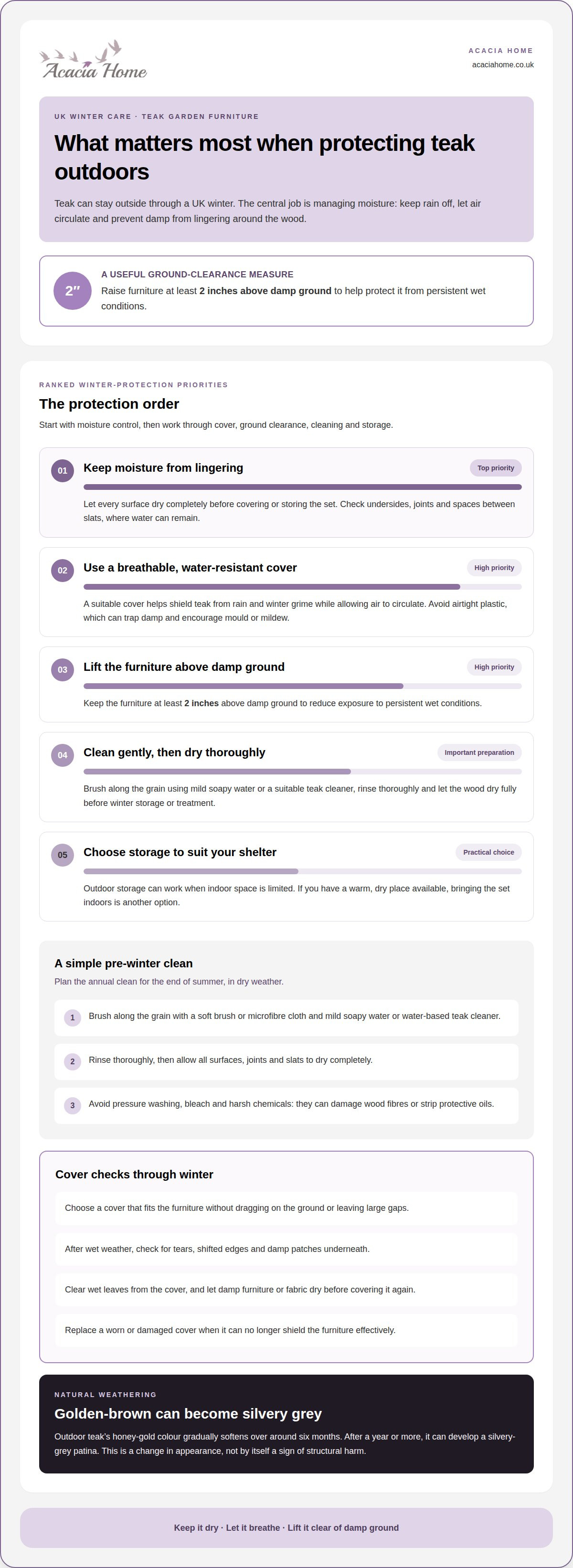
Teak furniture can stay outdoors through a UK winter if you keep it dry, covered with breathable material and raised at least 2 inches above damp ground. If you have a warm, dry place to store it, bringing it indoors offers another option; otherwise, learning how to protect teak furniture in winter in the UK starts with preventing moisture from lingering around the wood.
It’s understandable to want to protect a treasured garden set from cold, rain and winter grime. But teak’s natural weather resistance means it can stay outdoors when indoor space is limited. The key is to keep rain off without trapping damp against the wood.
This guide explains how to prepare teak for winter, choose and use a breathable cover, and keep furniture raised above wet ground. You’ll also learn when outdoor storage makes sense, when indoor storage is preferable, and how to care for teak as its colour weathers.
Table of Contents
How To Protect Teak Garden Furniture?
Before winter storage, brush teak along the grain with mild soapy water, rinse thoroughly and let every surface dry completely. A gentle annual clean removes dirt, algae and lichens. Choosing the right timing and products also helps preserve the wood’s natural patina.
Plan Annual Cleaning Before WinterSchedule an annual clean and any teak treatment for the end of summer, in dry weather so the furniture can dry properly afterwards. Check for algae, lichens and dirt, especially around joints and slats where moisture can linger. Early autumn is a suitable time for protective treatment. If you’re considering how to protect teak furniture in winter UK conditions, start with clean, completely dry wood. Dampness trapped beneath treatment can cause black spotting.
Clean Teak with Suitable CleanerBrush outdoor teak along the grain with a soft brush or microfibre cloth and a specialist water-based teak cleaner. If you don’t have one, use washing-up liquid mixed with warm water. Clean the whole surface gently, then rinse thoroughly with a garden hose. Avoid pressure washing, which can tear the wood fibres, and skip bleach or harsh chemicals that strip away protective oils. These steps explain how to protect teak furniture in winter UK gardens without harsh cleaning methods.
Dry Furniture Before Winter StorageAfter washing, rinse away all soap and leave the furniture in a dry, airy spot until the wood is completely dry. Check the undersides, joints and spaces between slats, where water may remain after the main surfaces feel dry. Don’t store or cover teak while it’s damp: trapped moisture can encourage mould or mildew, and treatment applied too soon can cause black spotting. Let the wood dry fully first.
Clean Teak at the Season’s StartAt the start of the outdoor season, check for algae or moss and clean the teak on a mild, dry spring day. Use hot, soapy water and a stiff-bristled brush, working along the grain and taking care around joints. Rinse thoroughly and allow the furniture to dry. This seasonal clean lifts winter grime while leaving the wood’s natural patina intact. Avoid harsh cleaners that can strip its protective oils.
Choosing breathable, water-resistant furniture covers
A cover can shield teak garden furniture from rain and winter grime, but it must allow air to circulate. Choose a breathable, water-resistant cover and make sure the furniture is dry before covering it.
Weigh the Pros and Cons of CoversA cover helps shield garden furniture from harsh winter weather and reduces the dirt that settles on teak outdoors. Before covering a set, consider whether it will be in a sheltered spot or exposed to rain and wind. A cover keeps the surface cleaner, but non-breathable plastic can trap moisture and create conditions for mould and mildew.
Cover Furniture During RainChoose a heavy-duty, water-resistant cover to help keep out persistent rain, especially if the teak garden set is fully exposed. Check that the cover fits the furniture rather than dragging on the ground or leaving large gaps over the seats. Waterproof protection is useful against rain, but it should still allow airflow. Replace a damaged or weather-beaten cover when it can no longer shield the furniture effectively.
Avoid Mould Beneath CoversLet teak dry completely before covering it. A cover on damp furniture can hold moisture against the wood and encourage mould or mildew, particularly where it touches seats, table edges or slats. Choose breathable material rather than airtight plastic, then check beneath the cover after wet weather. If the furniture or cover feels damp, uncover the set and let it dry before putting the cover back on.
Choose a cover to suit the furniture’s shape and the garden’s exposure. A table with chairs tucked beneath it needs a cover that reaches over the whole set, while separate pieces may be easier to cover individually. Keep the fabric from resting heavily against the wood, and avoid a loose cover that can shift in the wind. Breathable material offers a practical balance: it keeps rain and debris off while allowing moisture to escape.Make checking the cover part of your winter routine. After rain, look for tears, shifted edges and damp patches underneath. Clear leaves that collect on top, as wet debris can keep the cover and furniture damp. Replace a worn cover rather than relying on damaged fabric to protect the set.
If you’re also planning a garden refresh, explore outdoor furniture for ideas that suit your space.
Can Teak Furniture Stay Outside in Winter?
Yes, teak can stay outside through a UK winter, even when indoor storage space is limited. Its natural weather resistance helps it withstand exposure, although its colour will gradually change outdoors.
Understand Teak’s Natural Weather ResistanceLeave quality teak outdoors if storage space is limited, while remembering that natural resistance doesn’t mean the wood remains unchanged. Teak’s natural oils and rubber help repel moisture, and its rubber acts as a preservative against fungi and wood-eating insects. Grade A teak heartwood is rich in protective oils. These qualities help explain why teak can withstand outdoor weather, including rain and changing conditions.
Expect Winter Weathering to Silvery GreyLet teak’s appearance evolve rather than treating a silver-grey surface as damage. New outdoor teak starts with a honey-gold tone, which gradually softens over around six months; exposure and climate affect the pace. After a year or more, it can develop a silvery-grey patina. This change is aesthetic rather than structural, so a shift from the original colour doesn’t by itself mean the furniture has been harmed.
Decide whether you want to preserve teak’s original golden colour or welcome its natural patina. Uncovered furniture weathers towards silver-grey more quickly, while teak protector can retain the original colour. There’s a trade-off: protector removes the natural patina. Consider which look you prefer before treating the wood, rather than assuming every colour change needs intervention.Keep weather resistance and appearance separate. Teak can remain suitable for outdoor use as its colour changes, and leaving it untreated doesn’t stop it from weathering. Choose treatment for the finish you want, not simply because winter is approaching.
Consider the difference between the wood and its finish when assessing weathered teak. The wood’s natural oils and rubber help limit moisture entering the grain, while the surface colour responds to outdoor exposure. A silvery-grey finish is a familiar part of this process. Look for signs of colour weathering rather than treating the change itself as evidence of structural damage.High-quality teak garden furniture can last for many years without treatment. This resilience makes outdoor winter storage practical when covered indoor space is limited. The wood may weather more quickly if left uncovered, but a silver-grey patina is a visual change, not automatically a reason to replace the furniture.
Keeping furniture raised off damp ground
Protect teak from standing water by raising it at least 2 inches above damp ground. Teak does not freeze and crack when temperatures fall below zero, but lifting the legs helps limit prolonged moisture exposure.
Place every leg on a firm, stable support that holds the furniture at least 2 inches above damp ground. Raise all legs evenly, so a table or chair stays balanced rather than rocking on uneven paving. This gap helps reduce contact with moisture and lowers the risk of rot. Check the ground beneath the furniture too: a low spot that gathers rain can keep the legs persistently wet.
Choose a position where rainwater drains away instead of pooling around the feet. Move the set away from dips in a lawn or patio, and avoid placing the legs in standing water after heavy rain. A waterproof cover can shield the upper surfaces from the elements, but it won’t protect the legs from saturated ground. Elevation and drainage work together.
As part of your winter checks, clear snow and pooled water from around the furniture. Gently remove snow from seats and table surfaces, then make sure meltwater can drain away from the legs. Teak’s natural resistance means frost alone isn’t expected to make it freeze and crack below zero, but moisture can still collect around ground-level contact points. Keep these areas as dry as practical.
After wet or frosty weather, inspect each support, especially where a leg meets the ground. Check that the supports are stable, the furniture is raised evenly, and leaves or debris haven’t blocked drainage underneath. Damp debris can hold moisture close to the feet and encourage mildew nearby. Clear it away to restore the open space beneath the furniture, allowing air and water to move freely.
If you store teak garden furniture indoors during autumn, winter or spring, choose a warm, non-damp place. These are the conditions to look for in an indoor storage area. Keep the furniture there for the season, rather than moving it into a damp space.
For seasonal storage, bring the teak garden furniture indoors and keep it in a warm, non-damp environment during autumn, winter and spring. This provides a clear seasonal routine: indoor storage through autumn, indoor storage through winter, and indoor storage through spring. Choose the indoor environment to be warm and non-damp throughout that seasonal period.
Whether teak furniture can stay outdoors in winter
Teak can stay outdoors through a UK winter, particularly when indoor storage is limited. Choose between outdoor and indoor storage by weighing the available shelter, the furniture’s condition and whether you welcome its weathered appearance.
Leave teak outdoors if you don’t have suitable indoor space, and prepare it for continued exposure. Teak is naturally weather-resistant, so winter weather doesn’t mean the furniture must come inside. However, outdoor storage means accepting gradual changes to the surface and colour. Before choosing where the set will spend the season, decide whether that evolving appearance suits your garden.
Store the set indoors if you have a warm, dry place and want to reduce its exposure to the elements. A dry shed or other suitable indoor space can shelter teak during autumn, winter and spring. Avoid damp storage, where moisture can linger around the furniture. Bringing the set inside is an option, not a requirement: limited indoor space doesn’t make outdoor winter storage impractical.
Consider teak’s natural oils rather than assuming untreated wood is unprotected. Its natural oils and rubber help resist moisture, and quality hardwood furniture can last for many years without treatment. This resilience makes it practical to leave teak outside when space is tight. It won’t preserve the original colour, though, so distinguish between protecting the wood and maintaining a particular finish.
Choose outdoor storage if you’re happy for the appearance to weather. New teak’s golden-brown colour gradually becomes silvery-grey outdoors, and uncovered furniture may develop this patina faster. The change is aesthetic rather than structural. If you prefer the original colour, consider using teak protector, which retains that colour but removes the natural patina.
Make the final choice according to your storage conditions and preferred appearance, not the word “winter” alone. A dry indoor space offers shelter, whilst a well-prepared outdoor position suits households without one. Hardwood furniture such as teak can stay outside when covered space is limited. If your garden plans are changing, explore options for your space.
Colour gradually softens around 6 months, depending on sun exposure and climate conditions. After 1+ year, a silver-grey patina is aesthetic rather than structural.
Acacia Home: Teak Garden Furniture
Acacia Home offers teak garden furniture to help create a welcoming outdoor setting you can enjoy through the seasons. Once you’ve decided whether to store teak indoors or leave it outside, explore pieces that suit your garden and how you plan to use it. Occasional chairs, dining chairs and footstools can also help create comfortable seating, indoors or outdoors where appropriate for the piece.
Choose furniture with your space and preferred look in mind, then use the cleaning, covering and storage steps in this guide to care for it through winter. For a closer look at the range, browse the outdoor furniture selection.
Contact Acacia Home to discuss your furniture needs.
Make your garden ready for the seasons ahead
Let your preferred look guide your choice. Teak can help create a calm, inviting garden, whether you enjoy its changing character or prefer to preserve a golden finish. Set a simple seasonal routine that suits how you use your outdoor space, so caring for the furniture feels considered rather than left to chance.
Knowing how to protect teak furniture in winter in the UK gives you a clear starting point, but the right setting also depends on the atmosphere you want to create. Think about where you’ll sit, dine or pause outdoors, then choose pieces that make those moments feel natural.
If you’re ready to explore what could suit your home and garden, speak with Acacia Home about your teak furniture. Take the next step at your own pace and shape an outdoor space you’ll look forward to using.
Frequently Asked Questions
Do teak garden sets need covering in winter UK?
No, teak garden sets don’t have to be covered to stay outdoors through a UK winter. A cover helps keep rain, leaves and bird droppings off the surfaces, but choose breathable material rather than airtight plastic. For example, cover a dry set after autumn cleaning, then lift or remove the cover if moisture collects underneath.
How Does Teak Weather Over Time?
Teak gradually shifts from honey-gold towards silvery-grey as it weathers outdoors. New furniture can show its golden tone during its first 0-3 months; around six months, the colour may soften, depending on sun exposure and climate. After a year or more, a silver-grey patina can develop. This change concerns appearance rather than structure, so colour alone isn’t a reason to replace a set.
Is It Necessary to Seal Teak?
No, sealing isn’t essential for teak to stay outdoors; good-quality teak can last for many years without treatment. The decision depends on the finish you want and the protection you choose. Sealant is recommended once or twice yearly for continuous protection, but apply it only when the wood is completely dry. If you prefer teak’s natural weathered patina, leaving it untreated is also an option.
To Cover or Not to Cover?
Cover teak if keeping it clean matters more to you than leaving it exposed to the weather. A cover can reduce the dirt and debris reaching a garden table, while uncovered teak develops its silver-grey appearance more quickly. The practical choice depends on the garden’s exposure and your preferred finish. Either way, don’t cover damp furniture, as trapped moisture beneath the fabric can encourage mould.
What are the essential aspects of effective teak outdoor furniture care?
Focus on gentle cleaning, thorough drying and suitable winter placement. Brush away surface dirt along the grain, rinse off any soap, and let the furniture dry before covering or storing it. Keep the legs clear of standing water, and check for algae after winter. If the set has cushions, clean and dry them before storing them indoors to help prevent mould.
Should teak furniture be stored indoors during a UK winter?
Indoor storage is optional, not a requirement for teak. If you have a warm, dry place, such as a suitable shed, you can store the furniture there through autumn, winter and spring. Avoid damp conditions, which can leave moisture around the wood. If indoor space is limited, teak can stay outside; focus instead on raising it above wet ground and protecting it appropriately.
Is teak oil, sealer or protector best for outdoor teak furniture?
The right choice depends on the appearance you prefer. Teak protector can retain the original colour but removes the natural patina; sealant is recommended once or twice yearly for continuous protection. No single treatment suits every finish, so decide whether retaining the colour or allowing natural silver-grey weathering matters more. Whichever treatment you choose, apply it only to clean, fully dry wood.
Comments