
Traditional Lighting in Victorian and Georgian Homes
A lantern can give a room a sense of history without making it feel like a period set. Traditional lighting draws on the 18th- and 19th-century European décor that influenced traditional style, bringing symmetry, decorative detail and heritage-inspired forms into the home. The result can feel composed and welcoming, whether the setting is a Victorian terrace or a Georgian townhouse.
If you’re drawn to the character of older homes, you’ll know the right light does more than brighten a room. Its shape, finish and placement help set the atmosphere. This guide explains traditional lighting and how to choose ceiling fixtures, materials, finishes and decorative details for your space.
We’ll explore Victorian and Georgian influences, consider lanterns and other statement fittings, and show how ceiling height and room proportions can guide your choices. You’ll have a clearer starting point for creating a home rich in character and distinctly your own.
Table of Contents
What's Traditional Lighting?
Traditional style draws on 18th- and 19th-century European décor, with balanced layouts and decorative details. In Victorian and Georgian homes, traditional lighting can connect a room’s architecture with its atmosphere.
Chandelier styles and room choices
Choose a chandelier to suit the room’s scale, ceiling height and purpose. A crystal design can bring sparkle to a formal dining room, while an antique-brass chandelier may complement a sitting room with dark wood and rich textiles. For softer illumination, look for traditional chandeliers with linen shades or hurricane glass.
A fitting above a dining table should feel balanced with the table, not overwhelm it. In a hall or stairwell, a lantern-style chandelier can create a striking focal point. Consider how it looks from the doorway and make sure it doesn’t obstruct the route through the room.
Traditional fitting types
Chandeliers and pendants draw the eye upwards or downwards, depending on their form. Flush and semi-flush fittings sit closer to the ceiling. Sconces add light at wall level, whilst table lamps create a gentler pool beside a chair or console. Lanterns bring an architectural outline indoors or outdoors.
Build a layered scheme with a polished nickel pendant, wall sconces and a table lamp. This gives different parts of the room their own light instead of relying on a single ceiling fitting. A thoughtfully chosen traditional lighting scheme can balance decorative detail with practical use.
Traditional designs often favour ornament, symmetry and heritage-inspired forms over the minimal shapes common in modern lighting. Transitional designs blend these references with cleaner contemporary lines, offering a middle ground.
In the UK, electrical work must be safe, and fixed wiring work may also involve building requirements. Replacing a fitting like for like is different from altering fixed wiring. Because the circuit, connections and mounting point all matter, installation should be carried out by someone competent.
A fitting’s cost depends on its materials, size, construction and decorative detail. Installation costs depend on the work involved, including whether the existing wiring and mounting point suit the replacement.
Traditional-style LED filament candle bulbs are available and can produce a warm yellow glow of 2200-2400k. Their energy use depends on the bulb’s wattage and how long it stays switched on. Compare the wattage on the packaging when choosing a bulb for a table lamp or pendant.
To clean a chandelier, switch it off and let it cool before dusting accessible surfaces with a soft cloth. Use a method suited to the material, whether glass, brass or nickel, and avoid pulling delicate components. Gentle, regular dusting keeps details visible without rough handling.
Before buying, consider the fitting’s weight, mounting point, wiring and clearance from doors or walkways. Loose connections, unsuitable wiring or insecure mounting can create safety risks. Checking these practical details helps ensure the fitting suits the room as well as its style.
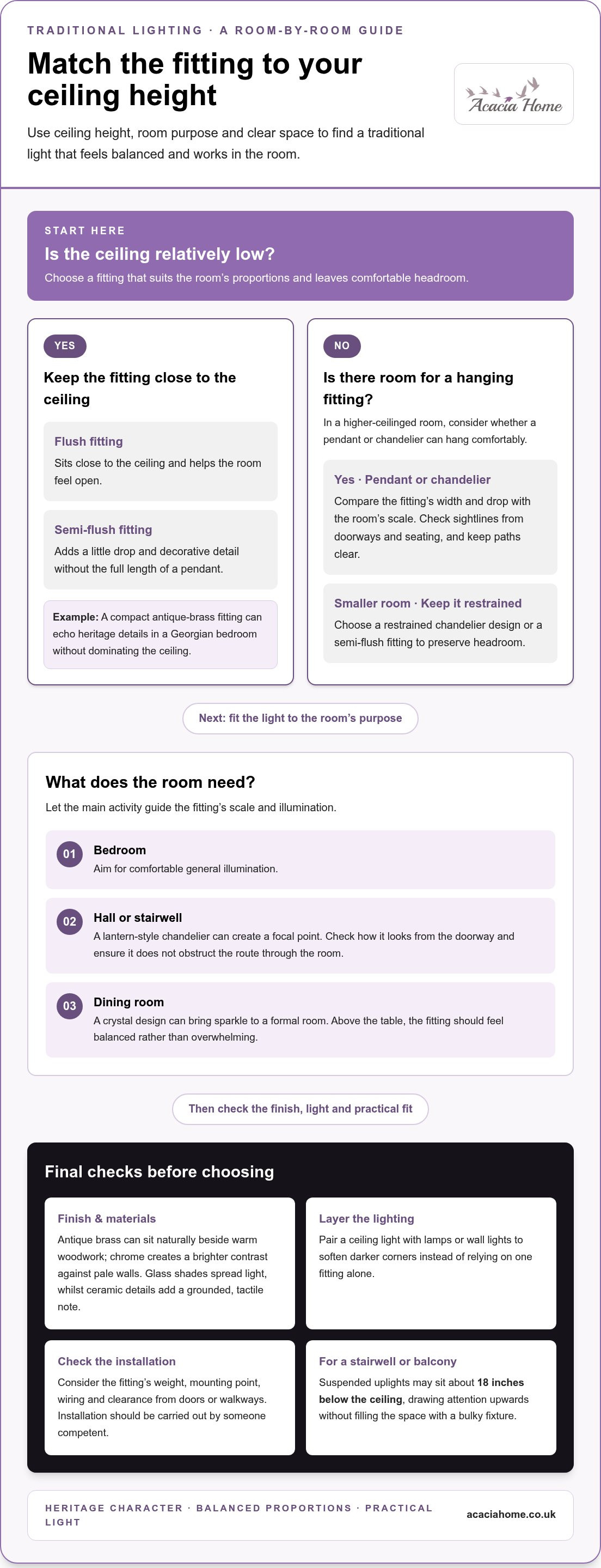
Traditional lights for low and high ceilings
Ceiling height affects how a fitting looks and how comfortably the room can be used. In a period home, balance its proportions with the ceiling, the room’s purpose and the available light.
Ceiling lights for period homes
For a lower ceiling, a flush fitting sits close to the surface and keeps the room feeling open. Semi-flush designs add a little drop and decorative detail without the full length of a pendant. In a Georgian bedroom, for example, a compact antique-brass fitting can echo heritage details without dominating the ceiling.
In a room with a higher ceiling, a pendant or chandelier can make use of the vertical space. Compare the fitting’s width and drop with the room’s scale, then check sightlines from doorways and seating. A light that looks elegant from below should still leave clear paths through the room.
Start by identifying the room’s main purpose. A bedroom needs comfortable general illumination, while a hall benefits from a fitting that makes a clear impression as visitors enter. Match the light output to the activities in the room, and choose a suitable size rather than relying on appearance alone.
For a traditional look, material and finish help connect ceiling lights with the room. Antique brass can sit naturally beside warm woodwork, while chrome creates a brighter contrast against pale walls. Glass shades let light spread through the room; ceramic details add a more grounded, tactile note.
Ceiling lights and chandeliers
A chandelier suits a high-ceilinged dining room or entrance hall, where its arms and decorative shape can be appreciated. In a smaller room, choose a restrained design or a semi-flush fitting to preserve headroom. A traditional ceiling light should provide enough illumination for the room’s activities as well as complement its proportions.
Think about how the fitting works with other light sources. A ceiling pendant can provide the central glow, while lamps or wall lights soften darker corners. For a stairwell or balcony, suspended uplights may sit about 18 inches below the home’s ceiling, drawing attention upwards without filling the space with a bulky fixture.
Outdoor settings need a different choice from indoor rooms. A garden lantern can give an entrance or sheltered outdoor area a traditional focal point, while a ceiling fitting suits a covered space. Keep the intended location in mind when comparing styles, and use ceramic and glass lighting as inspiration for indoor material choices.
Common traditional lighting materials and finishes
Material and finish shape how a fitting relates to its room. Brass, crystal, bronze, antique gold and brushed nickel all suit heritage-inspired interiors. Choose one as a visual thread, then repeat it selectively across fittings and furnishings. A brass pendant, for example, can echo the warm tones of a wooden sideboard.
Brass brings a warm, golden note to a ceiling light or wall fitting. An antique finish feels quieter and more timeworn than polished brass. Bronze offers deeper contrast, particularly against pale walls or dark hardwood. Brushed nickel looks cooler and more restrained, making it useful where polished metal might feel too bright.
Crystal changes how a chandelier catches and reflects light. It can bring a formal note to a dining room, especially alongside a mirror or glass-fronted cabinet. Glass shades have a softer presence, while hurricane glass covers can temper a chandelier’s glow. Linen shades also diffuse light, helping create a gentler atmosphere in a sitting room.
Look at the finishes already in the room before choosing a fitting. A bronze pendant beside brass door handles can feel deliberate if both suit the room’s palette. If the metals compete, repeat one finish in a lamp base, picture frame or curtain pole. This simple styling step helps bring different objects together.
Traditional rooms often use white or off-white walls, though wallpaper and bold paint can work too. Against a pale backdrop, antique gold or bronze stands out clearly. In a room with patterned wallpaper, a simpler finish can keep the ceiling from feeling crowded. Dark-finished hardwood makes a particularly rich setting for warm metal.
Consider the shade as carefully as the frame. A linen shade can soften a brass table lamp, while clear glass keeps the metalwork visible. In a rustic room, a bronze pendant with a simple glass cover can sit comfortably beside exposed timber. The contrast between smooth glass and textured wood adds depth without introducing another strong colour.
Before choosing a finish, compare it with three nearby surfaces: the wall, the floor and a prominent piece of furniture. For example, picture a brushed-nickel fitting against pale paint and dark wood. If the room already has ornate details, choose a quieter shade or frame. Let one decorative feature lead.
Finish names can describe an appearance rather than a uniform colour. Antique gold may look muted beside a brighter polished finish, while brushed nickel has a softer sheen than chrome. Compare the fitting with the room in daylight and lamplight. The light’s colour can change how metallic tones and painted surfaces look together.
A coordinated collection doesn’t have to mean identical fittings in every room. Use the same metal finish across a hallway pendant and nearby wall lights, then vary their shapes. A crystal chandelier can anchor the dining room, while a matching metal detail on a smaller lamp carries the theme into an adjoining space.
Victorian and Georgian designs
Victorian and Georgian interiors draw on European décor from the 18th and 19th centuries. Their lighting can share heritage details, yet differ in ornament, shape and visual weight.
Victorian lighting designs
For a Victorian room, consider fixtures with layered detail and a confident presence. A multi-arm chandelier can complement a formal sitting room, while a bronze ceiling pendant offers a grounded focal point in a hallway. Consider the ceiling rose, fireplace and furniture together. Their scale and decorative character can help you decide whether an ornate or simpler fitting feels balanced.
Brushed metal finishes can soften elaborate shapes. For instance, a brushed brass or bronze fixture can sit comfortably with patterned textiles and carved furniture. Choose a shade that complements the room’s colours rather than adding another competing pattern.
Georgian lighting designs
Georgian rooms often suit a more restrained, symmetrical approach. A classic pendant centred above a dining table can reinforce the room’s balance, while paired wall fixtures can frame a fireplace or doorway. Consider the ceiling’s proportions and existing architectural details before choosing a fitting with prominent arms or ornament.
Regency-inspired interiors can take a lighter, more polished approach. A neat chandelier with graceful curves may work well above a console or in a well-proportioned entrance. Keep the finish consistent with nearby metal details, such as door furniture or picture frames.
To choose between these influences, identify the room’s strongest features first. A Victorian fireplace with carved detailing may suit a decorative chandelier. A Georgian room with balanced windows and restrained mouldings may call for a cleaner ceiling pendant. The fitting should support those features, not compete with them.
Next, compare the fixture’s shape with the room’s lines. Rounded shades can soften a room dominated by straight panelling, while a more angular fitting can bring definition to a space with curved furniture. In either style, repeat one visible detail, such as bronze, brushed metal or glass, elsewhere in the room.
Colour also affects the period impression. Dark bronze can stand out against pale walls, while a polished surface draws more attention. In a patterned Victorian room, a quieter fixture may let the wallpaper lead. In a Georgian scheme, a classic silhouette can preserve an orderly feel.
Finally, view the fitting from the doorway and the main seat. A chandelier that looks balanced beneath a high ceiling may feel too dominant above a compact table. This simple room-by-room check connects historical references with how you use your home today.
Lanterns and decorative lighting ideas
A lantern adds a framed, architectural detail to a period interior. Its shape can echo a doorway, window or fireplace, making it useful beyond the main ceiling light. Consider where its outline will be seen, then choose a finish that relates to nearby fittings and furniture.
Indoors, a ceiling lantern can bring structure to a hallway or dining area. Antique brass and glass create a heritage-inspired combination, while polished nickel gives the same form a brighter, cooler character. In a narrow entrance, look for a design that feels proportionate beside the door and keeps the route visually clear.
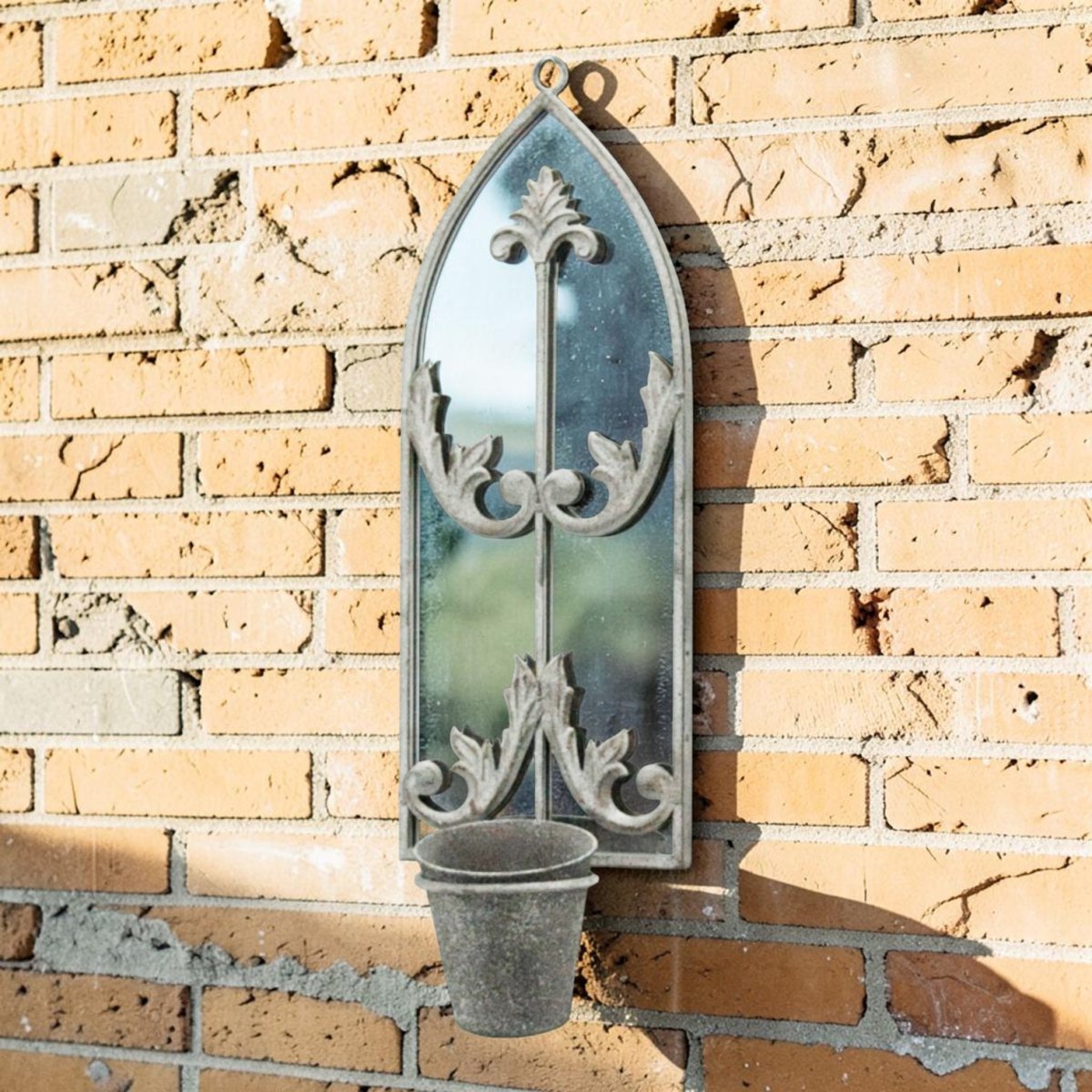
Lanterns also work outdoors, where they can mark a garden entrance or frame an exterior doorway. Choose a fitting intended for its location, then consider how its material and colour sit against brick, painted wood or stone. A bronze lantern can complement warm brickwork; a darker finish can add definition against pale render.
Decorative lighting doesn’t have to rely on one dramatic fixture. Pair a lantern with a table lamp, or use wall lights to balance a ceiling pendant. For example, a glass lantern near the entrance can lead towards a sitting room, where shaded lamps create a softer pool of light. Repeating one finish helps connect the spaces.
Shades change the character of a lantern or chandelier. Linen softens the light, while clear glass keeps the frame visible. Crystal details bring extra sparkle, particularly above a console or in a formal dining room. Silver-toned metal and polished nickel feel crisp; antique brass and bronze give a warmer impression.
For a decorative centrepiece, consider scale as well as ornament. A large lantern can anchor a generous hall, while a compact fitting suits a smaller landing. Check its shape from the doorway and the main viewpoint. This simple step helps keep a detailed design from overwhelming the room.
Candlelight can add another layer to a lantern display. One decorative example uses three orange pillar candles, creating a warm seasonal accent on a stable surface. Keep the arrangement distinct from fixed lighting, and let the lantern’s frame, glass and candle colour work together as one visual feature.
Build a cohesive scheme by choosing one leading detail, such as crystal, silver or aged metal. Repeat it in a picture frame, mirror or lamp base rather than matching every fitting. For a coordinated starting point, explore decorative lighting styles and compare how glass, ceramic and concrete shapes contribute to a room’s character.
Acacia Home: Occasional Chairs
Acacia Home offers occasional chairs to help complete a thoughtfully furnished period room. Once you’ve chosen lighting, consider how seating, shape and upholstery can balance the room’s decorative details. An occasional chair can create a comfortable reading corner beneath a wall light, whilst a footstool adds a practical finishing touch beside it.
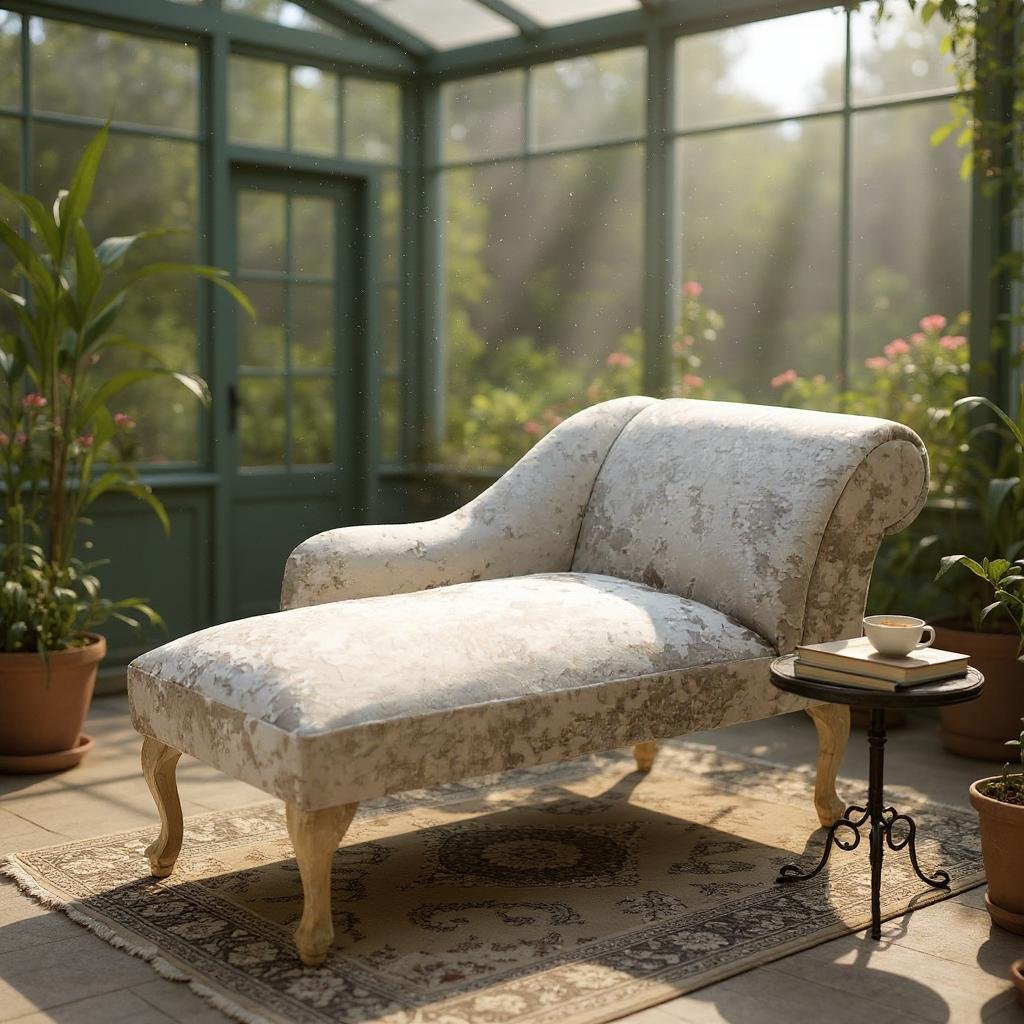
For a more formal setting, dining chairs can complement the character of a Georgian dining room. A chaise longue or window seat can make better use of a Victorian bay window, adding a graceful place to pause. Choose pieces that work with your room’s existing colours and finishes rather than matching every detail exactly.
Explore Acacia Home’s furniture for pieces to bring your room together, or visit acaciahome.co.uk.
Give your rooms a considered finishing touch
Next, notice how each room feels after dark. Consider where you want a welcoming glow, where a decorative fitting could become a focal point, and how the surrounding furnishings support that atmosphere. A thoughtful traditional lighting scheme feels personal when the room’s details work together, not when they match perfectly.
Acacia Home offers occasional chairs, dining chairs and footstools to shape the character and comfort of your interior. Explore these alongside the lighting options and consider which pieces will make your home feel more distinctly yours.
Contact Acacia Home about lighting and take the next step towards a home that feels warm, individual and welcoming.
Frequently Asked Questions
What is Traditional Style?
Traditional style brings together established design details to create rooms with a composed, lived-in character. A Georgian interior might feature balanced furniture placement, while a Victorian room may feel more layered. For a practical starting point, identify one feature you want to keep prominent, such as a fireplace or patterned rug. Then let your traditional lighting and furniture choices support that feature instead of competing for attention.
What is traditional lighting?
Traditional lighting uses decorative forms and finishes inspired by historic interiors, adapted for everyday homes. A lantern above a console or a shaded lamp beside a favourite chair can establish the look without changing the whole room. Consider how a fitting appears in daylight as well as after dark. Its frame, shade and light pattern all affect whether it feels like a natural part of your interior.
What are the main types of traditional lighting fixtures?
Common choices include chandeliers, pendants, flush and semi-flush ceiling fittings, wall sconces, table lamps and lanterns. Choose according to what each light needs to do: a lamp can brighten a reading spot, while a wall fitting can illuminate a passage. If a room has a central ceiling light, place a lamp near a darker corner to make the space more comfortable to use in the evening.
Which materials and finishes are common in traditional lighting?
Brass, crystal, bronze, antique gold and brushed nickel are familiar choices, alongside glass and fabric shades. To select a finish, compare it with visible details nearby, such as a mirror frame or door handle. If those elements have different metals, repeat one finish in a smaller accessory. This creates a deliberate link without making every fitting or decorative object identical.
How do I choose traditional lighting for each room?
Start with the activity and mood you want in each space, then choose fittings to support both. A dining area needs clear light over the table, while a bedroom may feel more restful with softer bedside illumination. In a hallway, consider how the fitting looks from the entrance. This room-by-room approach helps traditional lighting feel connected throughout the home without repeating the same design everywhere.
What sizes and heights should traditional light fixtures be?
Choose a fixture that feels in proportion to the room and leaves clear space around furniture and walkways. Before buying, mark its approximate width and drop with paper or a simple hanging template. View the outline from the doorway and the main seating position. Above a dining table, allow comfortable clearance for people to sit and move without the fitting obstructing conversation or sightlines.
How much does traditional lighting cost in the UK?
The price depends on the fitting’s materials, size, construction and decorative detail.
Comments